Let’s say you’re washing dishes in front of a window, or maybe you’re outside with the dogs. Wherever you are, you happen to look up and spot a barefooted guy wearing a tin pot on his head, and it looks like he’s scattering seeds from a sack as he scampers along his way.
And you think to yourself: What the heck?
Would it make a difference if we mentioned that the seeds he’s spreading are apple seeds? Or that this scenario played out some 200 years ago?
It might to a schoolchild who has learned about John Chapman. John was born in Massachusetts a few months before the American Revolution, and that still might not mean anything to some of us until we mention his nom de plume, Johnny Appleseed.
And yes, Johnny Appleseed was a real person.
Chapman, whom we’ll now call Johnny, lived a nomadic life in Ohio, and what he did with apple seeds begs the question: Why?
Johnny had a vision. It combined his Swedenborgian faith – caring for nature as a way to share God’s abundance – with practical enterprise. By planting apple seeds across the frontier, he provided settlers with essential crops like hard cider (safer to drink than often-contaminated water) and vinegar while legally claiming and selling land for a modest living. Traveling constantly allowed him to tend multiple orchards, spread seeds far and wide, and live simply in accordance with his spiritual beliefs. His wandering life was not aimless—it was a deliberate blend of faith, generosity, and entrepreneurship that left a lasting mark on the American frontier – and for future generations.
Who can now enjoy cider in the fall.
Johnny’s practical, albeit eccentric activity served to win over settlers and Indigenous people as he maintained respectful relationships with both. He often traded and shared knowledge, but his dedication created a lasting legacy, and that legacy allows us to segue into the second part of our post: Apple Orchards.
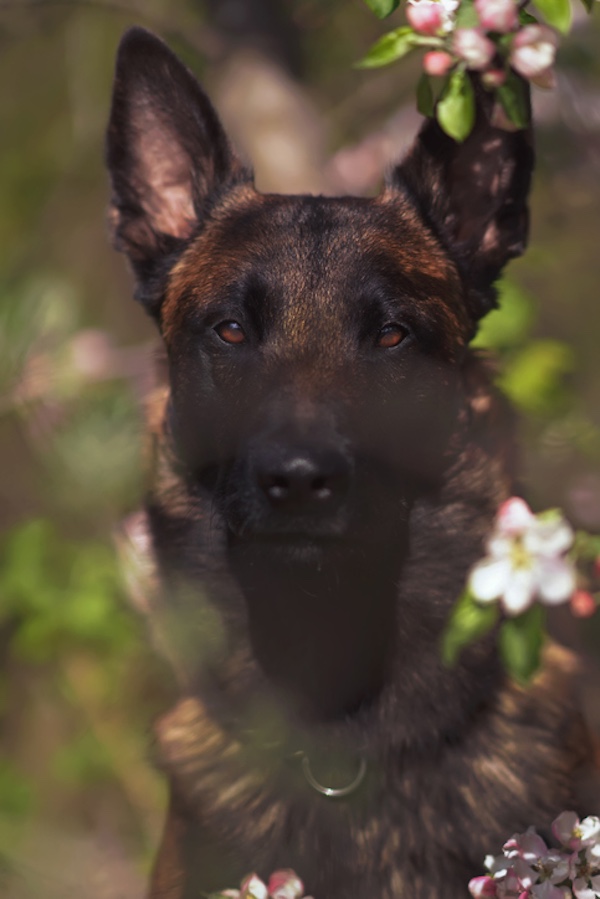
Apples were already part of colonial life since settlers brought seeds and grafts as they moved west, but Johnny accelerated orchard growth. And while orchard growers of that time relied on human labor to tend and protect their orchards, modern growers are turning to a surprising helper: dogs! Today’s growers are using highly trained purebred dogs to protect orchards from disease, combining canine skill with cutting-edge agricultural science. A 2025 study at Washington State University, reported by KIRO7, trained Dutch Shepherds and Belgian Malinois to detect Little Cherry Disease in fruit trees. Conducted in orchards and greenhouses, the trials showed that the dogs could identify infected apple plants with nearly perfect accuracy.
Just as Johnny Appleseed once spread and safeguarded apples through careful planting and stewardship, today’s growers are using highly trained purebred dogs to protect orchards from disease, combining canine skill with cutting-edge agricultural science.
Image: Belgian Malinois under an apple tree by Eudyptula/iStock