Are you still saying “Swaziland” when referring to the country between eastern South Africa and Mozambique? That’s so 2018.
In April 2018 during celebrations for the country’s 50th anniversary of independence, King Mswati III notified the world that he was changing the name of Swaziland to the Kingdom of eSwatini (or eSwatini, for short). As an absolute monarch, he could do that.
The announcement reflected the King’s desire to move away from the name given during the British colonial era. He also noted that “Swaziland” was frequently confused with “Switzerland” when he traveled abroad (because the countries are so much alike. Not). Of note is that eSwatini (lowercase ‘e’) was the original version of the name that was used in the local SiSwati language. As an aside, many international bodies and cartographers simply standardized it to Eswatini (capital ‘E’) for formal writing. It’s actually a fascinating example of how a name change isn’t just about a map but about reclaiming an identity that existed long before.
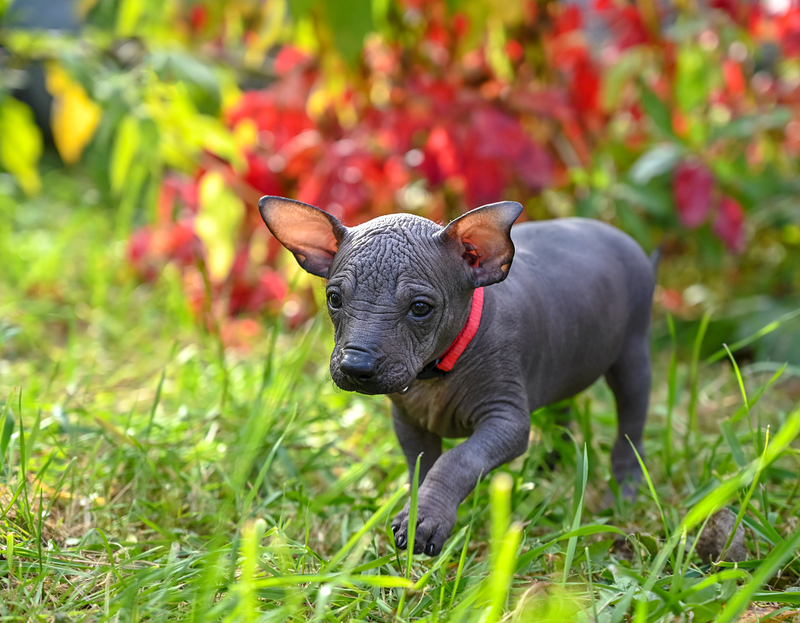
And that brings us to (as you knew it would) a dog breed, and specifically, the Xoloitzcuintli.
Fun fact: The Xoloitzcuintli was one of the earliest AKC-recognized breeds, but when it was recognized in 1887, it was listed as the Mexican Hairless. Over time, registrations declined so dramatically that the breed disappeared from AKC records and was dropped from registration altogether in the mid-20th century. Some even thought the breed was non-existent outside of Mexico.
Although the Xoloitzcuintli had disappeared from AKC records by the mid-20th century, the breed itself never vanished – small, viable populations persisted in rural regions of Mexico. Maintained for traditional and cultural reasons, the breed was, nevertheless, entirely outside the U.S. registry system. When Xolos were identified, documented, and organized through formal breeding programs in Mexico and later recognized internationally, they provided the foundation for renewed interest in the United States. The rest is history. Carefully documented imports of FCI-recognized Xoloitzcuintli allowed American fanciers to establish pedigreed populations, form a national breed club, and meet the AKC’s requirements for stability, governance, and consistency—ultimately enabling the breed’s re-recognition in the U.S. under its historic name.
And here is where we circle back to the name change.
Recognition of the name, “Mexican Hairless” as it was known in 1887 lapsed in the mid-20th century when those registrations declined. Once dropped, that recognition effectively ended; it was not “paused” or grandfathered.
Decades later, when the breed had been formally recovered in Mexico, standardized, and recognized by the FCI, it was under its indigenous name, Xoloitzcuintli. Just as King Mswati III returned a country’s “modern” name to its roots, so, too, did the name, Xoloitzcuintli, reinforce the breed’s historical heritage by reverting to the pre-Columbian language spoken by the Aztecs – Classical Nahuatl – a tongue still spoken by Nahua communities today.
When the AKC evaluated the breed again, it did not revive the old entry, but treated the Xoloitzcuintli as a new recognition application complete with new documentation, population data, and a modern breed standard. As part of the process, the AKC adopted the internationally accepted name Xoloitzcuintli, approving “Xolo” as the official nickname, and relegating Mexican Hairless Dog to historical usage only.
Fittingly, the move respected the breed’s cultural origin, and avoided a name that was both reductive and inaccurate, given the Xolor’s coated variety.
So while it is historically correct that the breed once appeared in AKC records as the Mexican Hairless, the 2011 re-recognition was not a “name change” within the registry. It was a fresh recognition of a restored breed under its correct historic name.
Image: Baby Xoloitzcuintli Dog © N Po | Dreamstime