
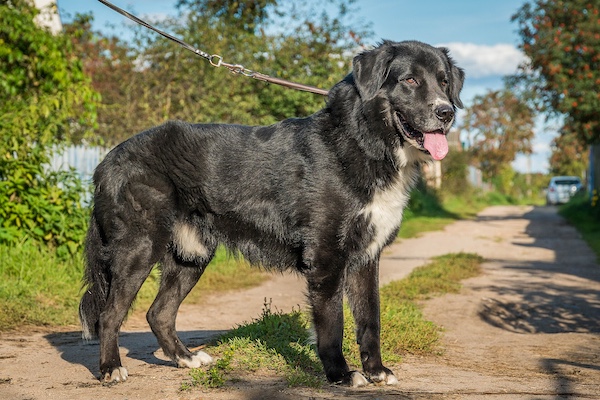
We make no apologies for believing that dog breeds are living legacies of the cultures that shaped them, and we often use language, music, and human vocal expression as our on‑ramp to show it. On these pages, we’ve covered ‘kulning‘ in Scandinavian countries, the extended “clicking” of the Xhosa language, Inuit singing called ‘katajjaq,’ the whistling language, “Silbo Gomero” from the Canary Islands, and the “whistling lullaby” naming tradition in Kongthong, India – and virtually every region has a breed tied to its people.
Finding a new example gives our pulse an extra “ba-bump,” and we were definitely ba-bumping when we came across Tuvan throat singing, or khöömei. It’s remarkable.
All human voices have overtones, which is to say harmonics that vibrate at higher frequencies than the main note. Throat singers, however, have mastered the ability to manipulate their vocal tract, tongue, and lips to produce multiple pitches simultaneously.
Give a careful listen to all the pitches in this singer’s voice:
The talented singer likely combined overtone singing styles, and to break it down, watch a different skilled practitioner break it down in the video below:
It can take decades to become a true Khöömeizhi, or master singer. Perfecting the “texture” of one’s sound was important because it had to be rich, clear, and resonant enough to carry across the open steppe bordering Mongolia within the Russian Federation. Khöömei is far more than a musical performance, however. It is a spiritual and cultural tradition that originated among semi-nomadic Tuvan herders and pastoralists as a way to mimic the sounds of the natural world—such as wind, rivers, birds, and animals. It reflected their animistic beliefs that nature is alive with spirits while also communicating with livestock or companions from afar.
That same landscape—and way of life—also shaped another essential companion of the Tuvan people: the Tuvan Shepherd Dog. Bred by the same semi-nomadic herders who practiced khöömei, these powerful, weather-hardened dogs were entrusted with guarding livestock against wolves, bears, and human thieves across vast, open terrain. Like throat singing, the Tuvan Shepherd Dog was not the product of fashion or formal breeding programs, but of necessity—selected for stamina, independence, acute awareness, and an almost intuitive understanding of its environment. In a culture where sound carried meaning and distance demanded self-reliance, the dog and the singer alike became living extensions of the steppe: alert, enduring, and deeply attuned to the rhythms of the natural world.
To be clear, the Tuvan Shepherd Dog is a native livestock guardian/pastoral dog that arose through local selection among the herding communities of the Tuva region. Its traits were shaped by environmental pressures and functional needs over time, rather than by formalized breed standards. Until recently, these dogs lacked a formal breed standard or registry, but in 2023, things changed.
It couldn’t have happened fast enough.
The Tuvan Shepherd Dog was once widespread and common among Tuvan herders. Following Tuva’s incorporation into the USSR in 1944, Soviet policies promoting sedentarization of nomadic communities—including forced settlement, collectivization, and restricted mobility—dramatically reduced the need for large, independent livestock guardian dogs. This decline was exacerbated by cattle theft, killings of dogs, forced neutering, crossbreeding with other types, and general social disruption. By the early 1960s, organized breeding stock was effectively lost, tribal lines had largely disappeared, and only small, scattered populations survived in remote areas such as Mongun-Taiga kozhuun and parts of Altai. Reports from ethnographic and Russian cynological sources describe the dogs as being on the brink of disappearance. As of 2023, some citing the Russian Cynological Federation (RKF) placed the total population at roughly 500 dogs, primarily in Tuva with smaller numbers in Moscow, St. Petersburg, and other western regions. These figures underscored the breed’s critically endangered status.
In 2023, the Russian Kynological Federation launched a structured program to rescue and formalize the Tuvan shepherd dog centered on a Commission created to preserve the aboriginal breed as cultural heritage of Tuva. The Commission coordinated scientific work that began in 2022, including expeditions to Tuvan herding camps, documentation of traditionally typed dogs in both Tuva and Central Russia, collection of genetic material, and the first detailed zootechnical descriptions and pedigree records. In 2024 the breed was granted preliminary recognition with a temporary standard, plans for entry into the national stud book, strict expert screening for breeding stock, and deliberate formation of lines and families as a breeding nucleus. Parallel efforts train and fund local Tuvan specialists, tie annual evaluations of dogs to the Naadym herders’ festival, develop the “Mongun‑Taiga” kennel in Moscow Oblast as a core base, and publicly frame the Tuvan dog as a cultural and ecological emblem of Tuva to build long‑term support for its conservation.
The Tuvan Shepherd Dog is more than a rare breed—it is a living symbol of Tuva’s culture and steppe life. Like the centuries-old art of khöömei, these dogs were shaped by the land, the herders, and the rhythms of survival. Today, careful conservation and local stewardship are bringing them back from the brink, preserving not just a breed, but a vital connection between people, place, and tradition. In protecting the Tuvan dog, a piece of human and natural heritage is also preserved.