
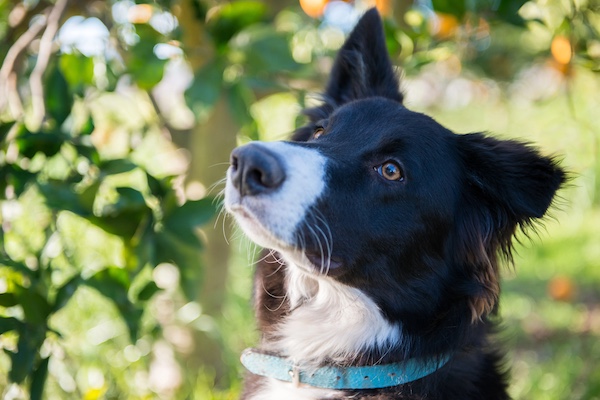
In the world of dog history, the “Utchak Sheepdog” was a phantom, a breed whose origins were often blurred by legend. In fact, it was a contradiction that was unreconciled for quite some time. It was said by some to be as real as the boogeyman under a child’s bed. But with no proof of existence in neither Russia nor its surrounds, the breed was, in the minds of some dog experts, non-existent, and that means it could never have factored into the histories of the Karelian Bear Dog or Russo-European Laika, two breeds mentioned as having Utchak in their backgrounds.
In 2018, modern genetics finally stepped in to draw some hard lines. The study by Jaakko L. O. Pohjoismäki and his colleagues, “Origins and Wanderings of the Finnish Hunting Spitzes,” provides a strong rebuttal to the idea that these dogs are just a Russian offshoot. Using high-resolution SNP analysis, the researchers found that the Finnish Spitz, Nordic Spitz, and Karelian Bear Dog form their own distinct genealogical branch, whose closest relatives are the eastern Eurasian Laika breeds rather than the Scandinavian spitzes just to the west. While they share ancient roots with the northeastern Eurasian Laika breeds, they have developed a “relatively little genetic resemblance” to the modern East-Siberian, West-Siberian, or Russo-European Laikas found just across the border.
This genetic distance is a crucial piece of the puzzle. The study notes that despite “superficial similarity” with arctic sled dogs of Asian origin and the fact that they occupy adjacent geographical areas, the Finnish breeds represent “inherently European breeds with little genetic connection to their Asian counterparts.” This effectively helps reconcile the contradiction: while hunters and authors may once have traded dogs or stories about “Utchak” blood and “super bear dogs,” the DNA tells a story of long-term differentiation from both western Scandinavian spitzes and modern Laika populations, with only limited historical gene flow. The researchers point out that the Finnish and Nordic Spitz are essentially “sister breeds” that likely derive from the same founder population and have drifted together, rather than simply being offshoots of contemporary Russian Laikas.
Even more striking is the finding that these Finnish hunting dogs are more closely related to each other than they are to other Scandinavian spitzes, like the Swedish Elkhound. The study highlights that the Karelian Bear Dog, in particular, has maintained its own recognizable genetic signature, and that some analyses place it as basal to Finnish and Nordic Spitz, while others show it clustering closely with the Russo-European Laika with evidence of gene flow between them. While enthusiasts of the “Utchak” myth might claim it was used to add “resistance to the cold,” Pohjoismäki’s data suggest that any such specific cross-breeding with an unverified “Utchak Sheepdog” was either non-existent or so negligible that it left no clear trace distinguishable from the documented admixture with known Laika-type or other eastern breeds. Ultimately, the “Utchak” remains a ghost, but the Karelian Bear Dog and its Finnish cousins are demonstrated to be genetically distinctive treasures of the North, standing largely on their own merits within the broader northern Eurasian spitz family.