
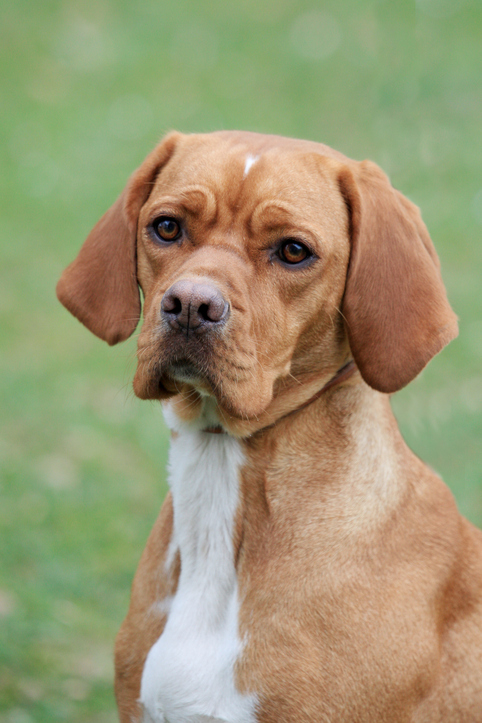
When you learn that “perdigueiro” comes from perdiz, the Portuguese word for partridge, you already know an important fact about the Perdigueiro Português. This is a partridge dog at heart, a medium-sized gundog developed in Portugal to find, point, and help hunters bring home upland birds. In English, most authorities call it the Portuguese Pointer, and that name matters: this is firmly a pointing breed, not a setter as some publications such as “Dogs, the Illustrated Guide to Breeds” by Joan Palmer, have written. The breed, possessed of the rigid, full-body “point” it holds when it locates game, is often cited as one of the Iberian ancestors of later pointer-type dogs that spread across Europe, though the exact lines of influence are hard to untangle. Unsurprisingly, it was originally used almost exclusively as a bird dog, with red‑legged partridge at the top of the list.
Expert sources, including the FCI breed standard, trace the breed’s presence in Portugal back to at least the 12th century, when dogs of this type appear as “podengo de mostra,” an early Portuguese term for a pointing dog. By the 14th century, they were being mentioned in hunting texts as a recognizable working dog, bred in royal and noble kennels and even used in falconry before they filtered out to everyday hunters in the 16th century. The Perdigueiro descends from the old Peninsular Pointing Dog, a foundation type believed to have influenced several continental pointing breeds. Some historians have suggested that Portuguese pointing dogs may have contributed to the ancestry of the English Pointer through British families in Portugal’s Port wine region, though the extent of that influence remains uncertain, and later English Pointer influence on the Perdigueiro is better documented.
Like many old working breeds, the Perdigueiro’s story hasn’t been a straight line. In the late 19th and early 20th centuries, fashion swung hard toward English Pointers and Setters, and crossbreeding, combined with shifting tastes, pushed the native Portuguese dog toward the margins. Type blurred, numbers fell, and the breed’s identity was at real risk. In the 1930s, devoted breeders went looking for traditional working dogs in rural areas and began to rebuild. A written standard was drawn up around 1939, and in subsequent decades a dedicated Portuguese breed club and international recognition helped secure its status as a true Portuguese original rather than a half‑remembered “partridge dog” from old paintings.
Image of a Portuguese Pointing Dog by CaptureLight/iStock