
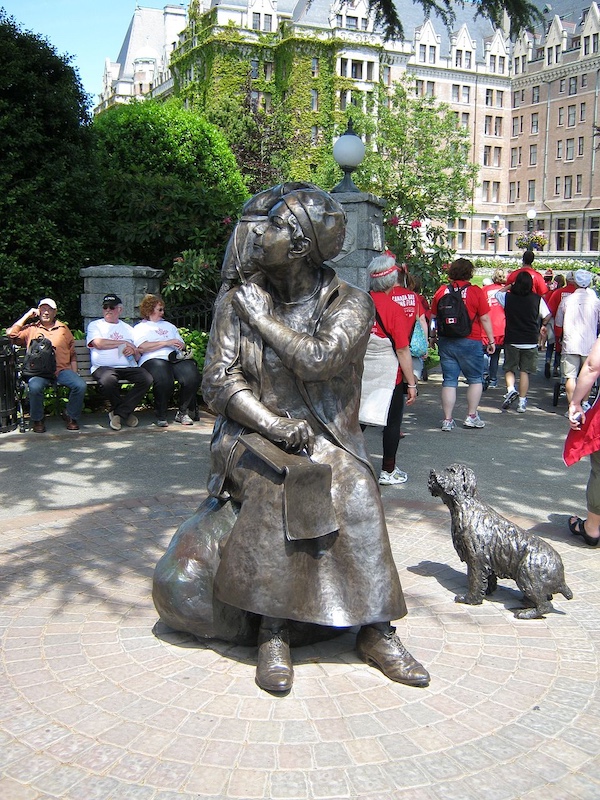
Still, it is right that Emily Carr be noted because she reshaped how Canadians see their own landscape, translating the forests and coastal villages of the West Coast into a bold, modern visual language. In fact, she is often cited as the first major Canadian artist to translate the wildness of the Pacific Northwest forest into a modern visual language that was unmistakably her own. Her work revealed a deep respect for Indigenous cultures at a time when very few in the mainstream were even paying attention.
For those of us who come to Carr through dogs rather than art history, her independence feels familiar. She resisted expectations, chose difficult subjects, and organized her life around work and her animals instead of social niceties. It is a pattern dog people recognize; many of us shape our lives around our dogs, from choosing furniture and vehicles to planning vacations around shows or trials. We usually prefer time with our dogs and like‑minded people over the ones who ask, “How many dogs do you own?”
But it wasn’t easy. Emily had planned to fund a quiet painting life by running a small apartment house in Victoria, but World War I and a bad economy detoured those plans. Coupled with a poorly received exhibition of totem‑pole and village paintings, Carr was moved to turn away from serious painting. Of that time she wrote, “Rentals sank, living rose. I could not afford help. I must be owner, agent, landlady and janitor. I loathed land-ladying… I tried in every way to augment my income. Small fruit, hens, rabbits, dogs – pottery… I never painted now – had neither time nor wanting. For about fifteen years I did not paint.”
She supported herself for a time by breeding Old English Sheepdogs—her beloved “Bobtails”—dogs she later celebrated in Emily Carr and Her Dogs: Flirt, Punk and Loo, a collection of vignettes and drawings about the Old English Sheepdogs that filled her life and helped pay the bills. Breeding for profit will not sit well with many readers today, but in her time it was not unusual, even for serious dog people. Carr’s own writing, however, makes it clear that the dogs were not disposable “stock,” but animals she lived with, drew, wrote about, and mourned. They slept in her house and followed at her heels; she doted on them.
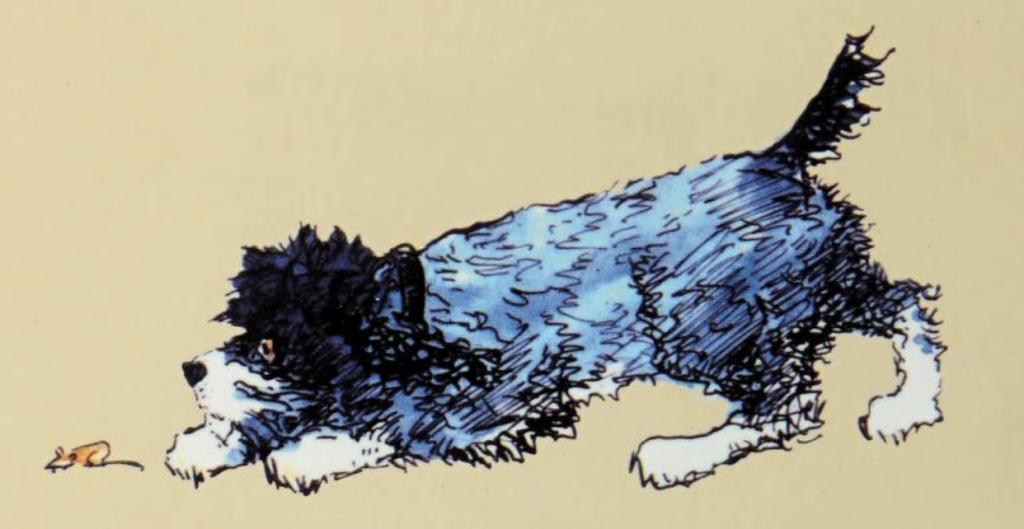
Drawing by Emily Carr, from Emily Carr & Her Dogs: Flirt, Punk & Loo” is in public domain. Archives https://archive.org/details/emilycarrherdogs0000carr
Her “fifteen years” away from painting ended in the late 1920s, when exposure to members of the Group of Seven and changing tastes in art reignited her confidence, and she returned to painting with the mature style for which she is now celebrated. Multiple heart attacks and a stroke forced Carr to downsize her dogs in the mid‑1930s. She got her first Brussels Griffon from Florence Waddell of Inglenook Kennels (Inglenook Gardens) in Victoria, trading the thundering sheepdogs for a small, bearded shadows who could more easily share a frailer woman’s life.
Carr’s dogs were more than pets; they embodied her fierce independence, humor, and connection to the natural world she painted so vividly. When ill health finally made it impossible to keep a houseful of animals, she carefully placed her dogs in good homes and turned more of her energy to writing about the ones who had shaped her life. The bronze dog at her side may not look much like Flirt, Punk, Loo, or the little Brussels Griffon who came later, but its presence still signals the truth that Emily Carr went through the world with dogs, and they were with her.
See a nice sampling of Carr’s artwork here.