
Regular readers of our posts know of our fondness for terms used in the dog world, but especially for archaic terms that are largely out of use. As we see it, being serious about purebred breeds entails a passing knowledge of terms used for various breeds for as long as their standards have been published.
Phrases and terms that are outdated or obsolete are, by definition, “archaic,” and depending upon your breed, not all of them are.
And so we turn to “Fiddle fronts.”
The current AKC breed standard for the Basset Hound writes, “Steepness in shoulder, fiddle fronts, and elbows that are out, are serious faults.” So does the standard for the Cardigan Welsh Corgi: “Overall, the bone should be heavy for a dog of this size, but not so heavy as to appear coarse or reduce agility. Knuckling over, straight front, fiddle front are serious faults.” Not to be left out are the AKC standards for the Petit Basset Griffon Vendéen, Dandie Dinmont Terrier, and West Highland White Terrier which also refer to “fiddle fronts” as a fault.
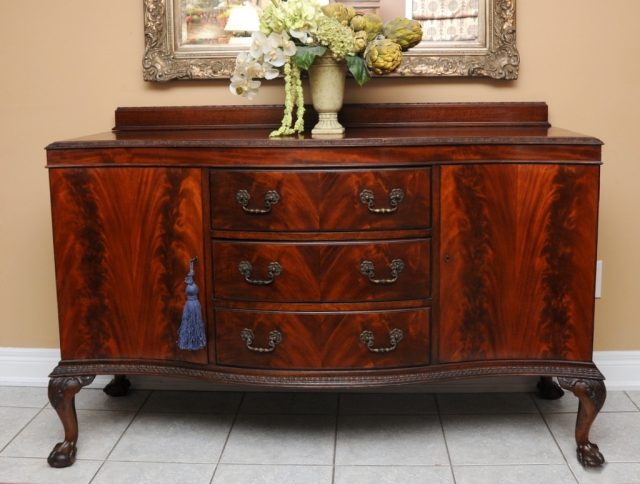
The term may seem odd if one is entrenched in, say, the toy breed world where not one breed standard uses it, but given that “fiddle fronts” appears in current breed standards, the term isn’t archaic. There is another word for the same attribute that may be more so, however, and that is the “chippendale” front. Both terms refer to elbows that are pushed outward, pasterns that are close, and feet that are turned out. A fault in every standard that refers to it.
But even “Chippendale front” isn’t especially old.
And then we came across the term, “French Front,” which is the reason we went down this rabbit hole in the first place. In 1942 (February 10, to be exact) at a meeting of the Directors for the AKC, a motion was made and unanimously voted upon that a standard as submitted by the Doberman Pinscher Club be approved. That standard made a “French Front” (“bow-legged front~ front too narrow or too wide”) a fault. As of this writing, a term used 83 years ago may not seem particularly old, but in the context of dog-show terminology, where phrases often shift, vanish, or evolve over centuries, eight decades and some change is a solid historical anchor. It shows that “French Front” was not a casual descriptor but a formally recognized structural fault, firmly embedded in the lexicon of dog breeding and judging in the US.
But why a “French front,” and not, say, a Dutch Front, or a Brazilian Front?
As far as we can tell, the answer lies in historical metaphor. Early dog judges and writers often associated structural traits with the dogs’ country of origin, and outward‑turned elbows were being commonly observed in French hounds and mastiffs of the day. Once the term appeared in official AKC standards, it became cemented in dog‑show language, and not necessarily because the trait was uniquely French, but because the wording was evocative, descriptive, and caught on.
Language in the dog world evolves, but certain terms endure because they capture both structure and history. From the still-current fiddle front to the evocative Chippendale front, and finally to the 83-year-old French Front, these phrases remind us that judging dogs has always been a blend of observation, metaphor, and tradition. Understanding them isn’t just about semantics—it’s about connecting with the history of the breeds we admire and the standards that define them. In every crooked elbow or turned-out pastern, there’s a story, and sometimes that story comes with a name that has endured for nearly a century.

Image of Chippendale Buffet Sideboard (look at the legs) from Revived Pieces via Wikicommons