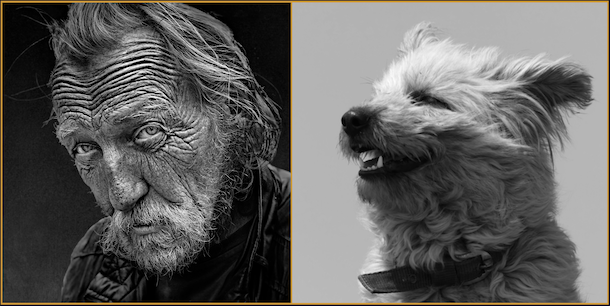
We use this image to draw comparisons between two subjects that, at first glance, couldn’t be more different. They have more in common, however, than you might think.
The man featured might be a fisherman, rancher, cowboy or outdoor laborer, while the Rough Faced Pyrenean Shepherd is a herder. Both faces are reflective of the conditions in which each one works, both representative of hard-earned adaptations to relentless environmental exposure, and to that end, both have windblown faces.
In fact, with regard to the Rough-Faced variety, the AKC breed standard mentions the word, ‘windswept, three times, and not for nothing: The Pyrenean is a worker-bee whose only protection from wild wind and weather of the high-altitude Pyrenees Mountains is the dog’s own body.
It’s important to clarify here that both the Smooth-Faced and Rough-Faced Pyrenean Shepherd share the same core traits of exceptional agility, intelligence, endurance, strong herding instinct, and weather-resistant coats overall. They were, after all, historically bred for the same job of herding sheep during transhumance migrations. The functional difference of coat, however, favors the Rough-Faced type for the highest, most exposed Pyrenees pastures.
So let’s explore why that might be.
After years in the elements, the face of the man in the photo resists immediate windburns, endures less chapping, and suffers fewer sunburn flare-ups because his skin has adapted to tolerate ongoing stress. Put another way, his face has the texture of leather.
For roughly the same reasons (ha, a pun), but in different ways, the rough-faced Pyr Shep’s coarse textured coat provides superior insulation and weather resistance keeping the dog warmer in freezing alpine nights, drier in persistent rain or snow, and better protected from environmental assaults. This allows the dog to work tirelessly without the discomfort they might have from a less-adapted coat. Bristly hairs sweep away from the eyes and muzzle creating the characteristic “windswept” look, but also shield the dog from snow, dust, thorns, and gusting mountain winds. Fringes in front of the eyes act like natural goggles and whiskers combined: they protect from debris, help the dog sense wind direction, and alert it to the presence of large objects in the landscape, while fringes on the ears shield them from weather, brush, and burrs and enhance the dog’s ability to detect subtle changes in air movement, direction, and other environmental cues—together allowing the rough-faced dog to navigate quickly and safely in harsh elements.
How important are the “windswept” and “fringe” components? Well, both are mentioned in the breed standard, and in a wonderful article by Kim Rice & Patricia Princehouse for Showsight magazine, it is pointed out that a lack of fringe and windswept face are indicative of a poor coat on the rest of a Rough-Faced Pyr Shep. They add that one can’t fake the correct wind-swept look, nor should one because, in part, the breed standard writes in italics and bold print: “No ribbon shall be awarded to a dog whose coat has been scissored, especially on the face, except for neatening of the feet.” This wording honors the working heritage of the breed because pulling or stripping out the fringe is removing the very hair that functions as protective and sensory equipment for a working dog.
Combined with a correct triangular skull and forward-set eyes, Rough-Faced dogs have the superior vision, depth perception, and balance essential for navigating the steep, rocky terrain of the Pyrenees while herding sheep at high speed.
In the future, we will cover the Smooth Faced Pyrenean Shepherd.
Collage photos: Pyrenean Shepherd by © Pushpasen/Dreamstime; weathered man by Ales Dusa/unsplash