
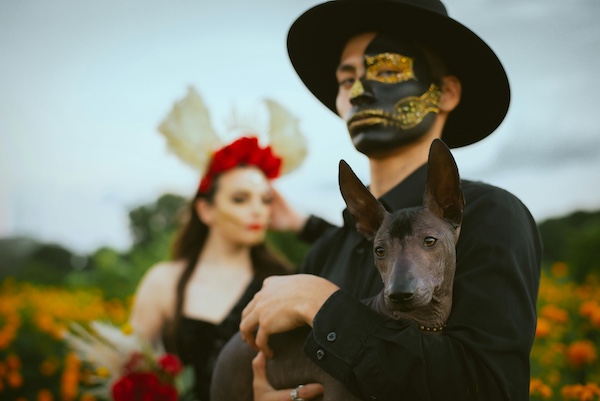
It is one of the world’s oldest and rarest breeds, and when we write that clay and ceramic statues/effigies of these dogs have been found in tombs of the Mayan, Colima and Aztec Indians, most dog people can guess that we’re talking about the Xoloitzcuintli.
In this post, however, we’re talking about the Quintana Roo Xoloitzcuintli.
Huh?
The Quintana Roo Xoloitzcuintli is not a variety of a breed that already has more than one size (toy, miniature and standard), two coat varieties (those with no hair and those with a short coat), and colors that range from black, gray black, slate, to red, liver or bronze.
What the Quintana Roo Xoloitzcuintli is, simply, is a regional representative of the ancient Xoloitzcuintli breed—sharing the same physical traits and genetic heritage, but celebrated locally for its unique cultural significance and deep roots in the traditions of the Yucatán Peninsula, and specifically the Mexican state of Quintana Roo. The breed’s presence in Quintana Roo offers a fascinating lens through which to explore the breed’s deep connections to Maya traditions, archaeological sites, and local customs.
To be clear, there is no recognized genetic or phenotypic differences setting Quintana Roo Xolos apart from the standard Xoloitzcuintli. The breed’s characteristics remain consistent across regions. Quintana Roo’s tropical climate and cultural context, however, may influence local breeding practices or preferences, such as a higher prevalence of hairless varieties due to heat adaptability. Cultural significance, tied to the region’s Mayan heritage, may also be more pronounced, but this is a matter of regional pride rather than biological distinction. Breeders in Quintana Roo, like those across Mexico, adhere to the same breed standards, with no evidence of a separate lineage.
As with many of our posts, we were inspired to dig deeper when we came across mention of Quintana Roo Xolos. Wary of potential scams, we looked into it a bit more (including searches on MercadoLibre) and determined that Quintana Roo Xolos are no different from other Xolos, and are puppies most likely to be found on regional Mexican classified sites. In the end, the breed serves as a powerful symbol of continuity, resilience, and the enduring bond between humans and dogs in a part of Mexico rich with history and meaning.
As am aside, if you ever spent time in Cancún, you’ve been to Quintana Roo; Cancún is the largest city in the Mexican state of Quintana Roo.