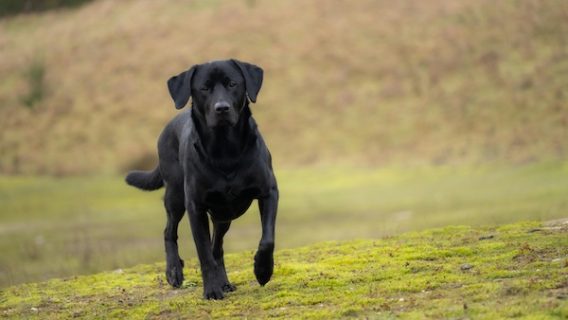
In 2018, a remarkable study in London showcased the abilities of dogs in medical detection. Researchers from Durham University and the London School of Hygiene & Tropical Medicine trained a Labrador Retriever named Sally to sniff out malaria from socks worn by children in The Gambia. The aim was to develop a non-invasive way to detect the disease early, before symptoms appear. Sally, along with Lexi—a Golden Retriever-Labrador mix—learned to recognize the distinct odor produced by malaria parasites. Incredible.
Labradors were chosen for their exceptional sense of smell and trainability. The results were impressive: Sally and Lexi identified malaria-infected socks with about 70% accuracy and uninfected ones with 90% accuracy. This suggested that, in the future, dogs could provide needle-free screening in malaria-prone areas.
In the video below you can see Sally in action:
Following the initial study, researchers refined their methods and expanded the potential applications. In 2020, The Guardian reported that the research had shifted toward training dogs to detect malaria directly from human skin rather than socks. Sally and Lexi adapted to this approach, which aimed to make detection more practical for real-world scenarios such as screening travelers at ports of entry.
By 2021, National Geographic highlighted further improvements in detection accuracy. Researchers began testing the method in real-world settings, including airports and border crossings, to evaluate its effectiveness as a rapid screening tool.
In 2022, a follow-up study published in PLOS ONE provided scientific validation, confirming that dogs like Sally and Lexi could detect malaria from human skin with high accuracy. This study emphasized the potential for canine olfaction as a fast, needle-free, and cost-effective diagnostic method.
Today, Sally is a veteran in this research area and remains a central figure in the project. She continues to detect malaria and has also taken on a mentorship role, helping train new dogs to recognize the scent of malaria. Her ongoing involvement highlights the resilience and adaptability of canine-assisted detection methods.
Researchers envision deploying malaria detection dogs like Sally in regions where malaria is endemic or in areas working to maintain elimination status, such as parts of Africa or Southeast Asia. The non-invasive nature and scalability of this method make it a promising complement to existing diagnostic tools, though further refinement and larger-scale trials are still needed. With improved accuracy and ongoing real-world testing, Sally’s legacy continues to grow as researchers pursue a practical, dog-powered solution to combat malaria.
Photo (but not of Sally) by Mark Coenraads