Imagine you’re at a cocktail party and someone introduces your left arm to your right arm—strange, considering they should know one another! Yet, this playful scenario illustrates the Bulldog’s unique hindquarters: the hocks angle inward, drawing close together as if exchanging greetings, while the hind feet turn sharply outward, almost as if they’re angled away and avoiding eye contact. These traits are no accident; the AKC breed standard specifically states, “The hocks are…made to approach each other, and the hind feet to turn outward.”
In most other breeds, having a dog’s rear legs positioned so that the joints turn inward while the hind feet are pointed well outward is enough to make most owners shriek in horror, “cow hocked! In the Bulldog, however, this configuration is an exception to the rule most of us learn about canine structure.
So what gives? As we see it, we should always ask ourselves, “why?” when learning about a breed. Why is a particular passage or language in a breed standard? How is it helpful for a dog to be built this way…
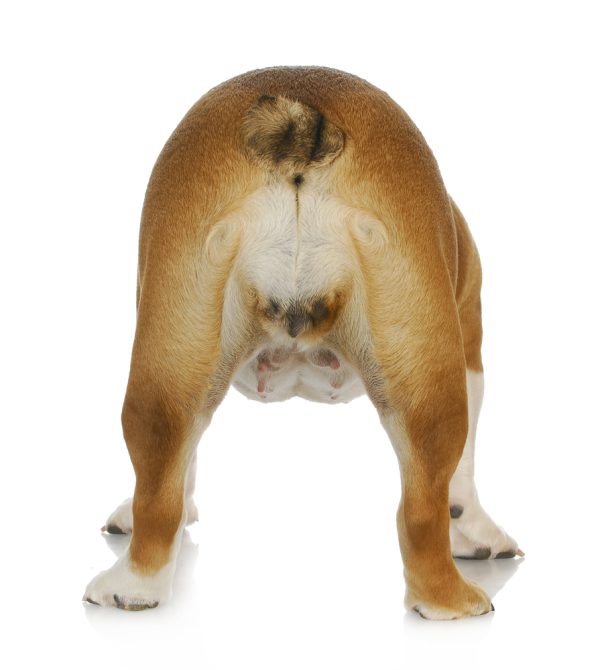
Photo by WilleeCole Photography/
shutterstock
Most frequently, the answer is found in the breed’s original purpose.
“Bull-baiting” was a Bulldog’s original job, and thankfully, it was relegated to the trash heap of history, but the Bulldog’s structure helped the dog brace and pivot without falling easily over in the face of an enraged and enormously bigger animal. In essence, inward hocks and outward turned feet created a tripod-like base that kept the dog anchored to the ground. The slight inward angle of the hocks locked the hindquarters together into a stable, braced position while outward facing paws increased lateral grip that kept the dog from slipping.
The stance is so effective that today’s bodybuilders and powerlifters make common use of it:

A wide stance with toes pointed outward increases hip external rotation and engages strong posterior chain muscles — similar to how a Bulldog’s inward hocks and outward feet create a stable, bracing rear. This structural confidence contributed to the Bulldog’s legendary tenacity.
Maintaining the iconic stance long after bull-baiting became obsolete served to remain true to the breed’s type and historical purpose. The Bulldog’s structure is a living echo of the breed’s history and purpose, and the next time you see a Bulldog and the way he or she stands, think of it as the dog’s way of planting its feet—and its legacy—firmly on the ground.
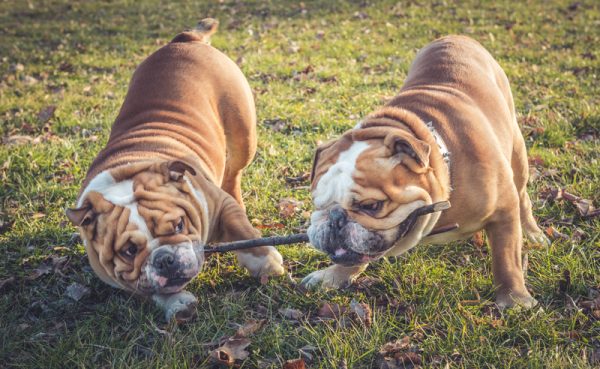
Top image of Bulldogs playing by © Djama86/Dreamstime