News flash: Seagulls don’t have ears.
Not visible ones, anyway. Like all birds, gulls do not have external ear flaps like mammals do. They have a small hole on the side of their head that is usually hidden by specialized feathers called auriculars. Auriculars help funnel sound to the inner ear while protecting the opening from debris and turbulence.
So why does the Whippet’s Illustrated Guide praise “gull wing” ears given that actual gulls don’t even have visible ears? We’ll let the photos below explain:
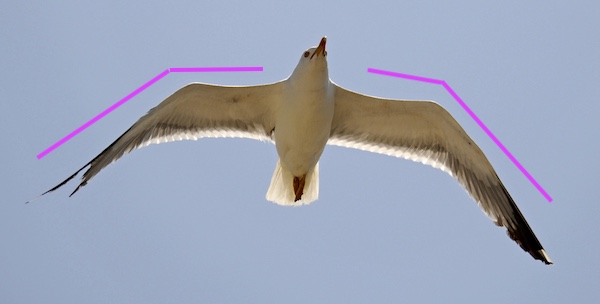
Gull photo by 00×00 iStock
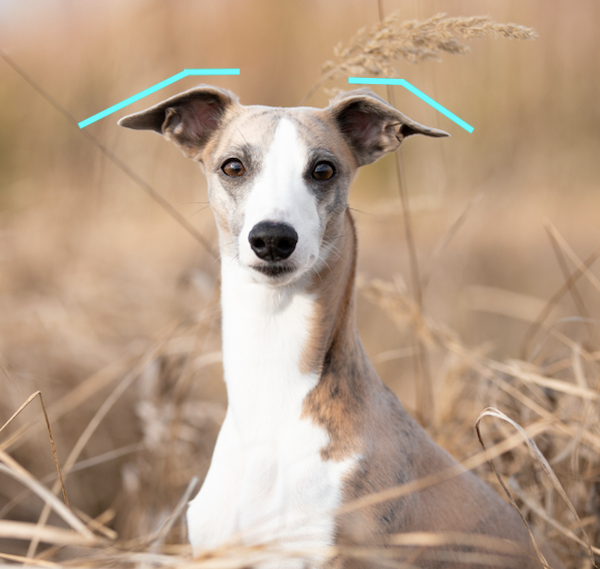
Photo by Nadja Huebner/Shutterstock
As the illustrated guide writes, “In a perfect world, we like high, fine, crisp ‘gull wing’ ears,” but importantly, the text adds that as long as the ear falls into the definition of ‘rose,’ it shouldn’t be faulted.
On these pages, we often refer to a breed’s function to understand why a breed standard is worded the way it is. While a ‘gull wing ear’ is not mentioned in the AKC standard, it offers practical benefits in aerodynamics, ear health, sensory efficiency, and expressive communication that align with the Whippet’s heritage as a swift, agile sighthound. When sprinting at speeds up to 35–40 miles per hour, even minor drag can impact performance. The gull wing ear, with its crisp forward fold and elevated carriage, reduces wind resistance and pivots smoothly with motion, streamlining airflow over the head and neck. This subtle advantage is especially valued in lure coursing and straight racing, where fractions of a second matter. Because Whippets that compete in field events do so outdoors—often in dusty fields or grassy arenas—a semi-erect gull wing ear also promotes natural drying and reduces the risk of bacterial or yeast infections.
Functionally, the ear also contributes to sensory efficiency. While Whippets hunt primarily by sight, acute hearing remains important for detecting subtle sounds during a chase. The gull wing shape funnels sound waves more effectively than fully drooped ears, offering a modest but meaningful improvement in auditory reception without the exaggerated exposure of prick ears, which can be vulnerable to injury in rough terrain. This balanced design supports the breed’s working heritage, even though most Whippets today are companions or show dogs.
Whippets are also sensitive and affectionate dogs regardless of what their ears look like. That said, we can’t help but feel that gull wing ears enhance this breed’s expressive traits. The mobile, upright fold seems to signal mood: forward for curiosity, slightly back for a calm confidence, or flattened in uncertainty or submission. That said, it’s important to note that a lack of ear animation should not be penalized in the conformation ring, though handlers often rely on ear position as a visual cue to the dog’s mood at the end of the lead.
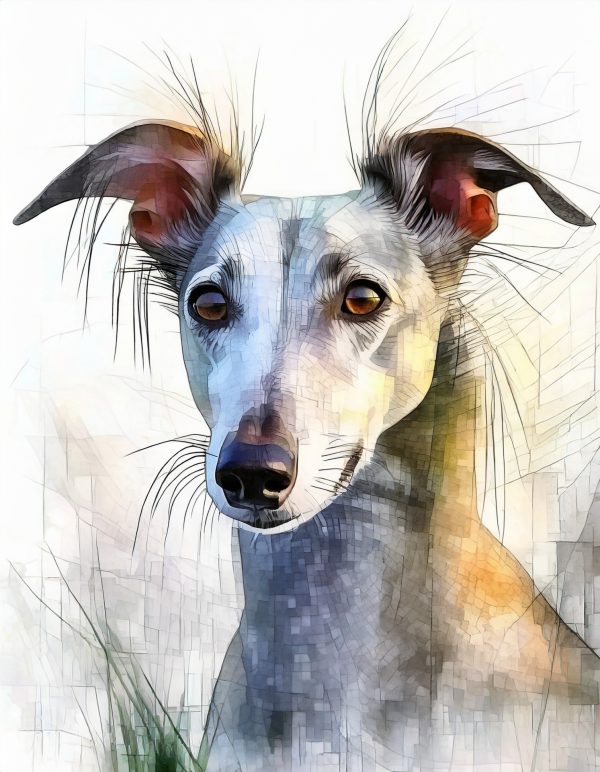
Top image by Freddy Dendoktoor and shared under the Public Domain license.