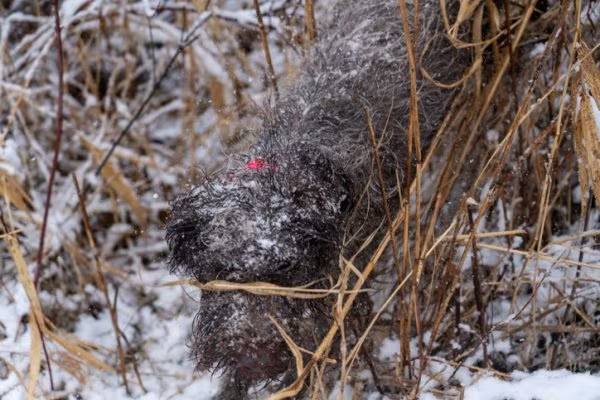
To a hunter, the plants and thickets seen below are known as “bird motels:”
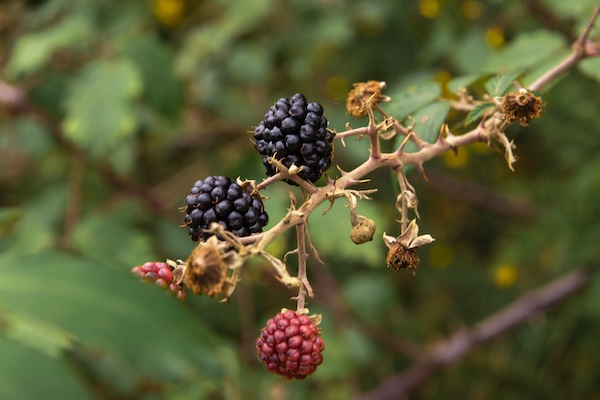
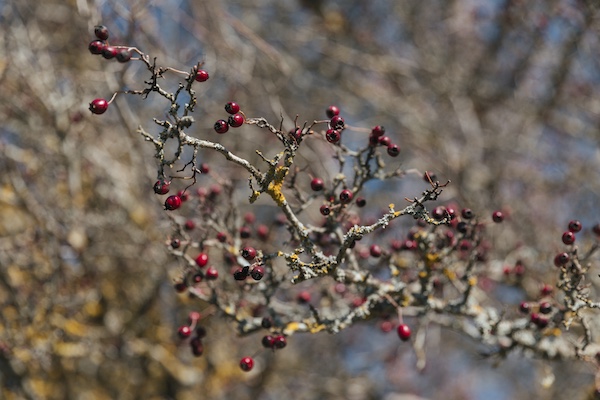
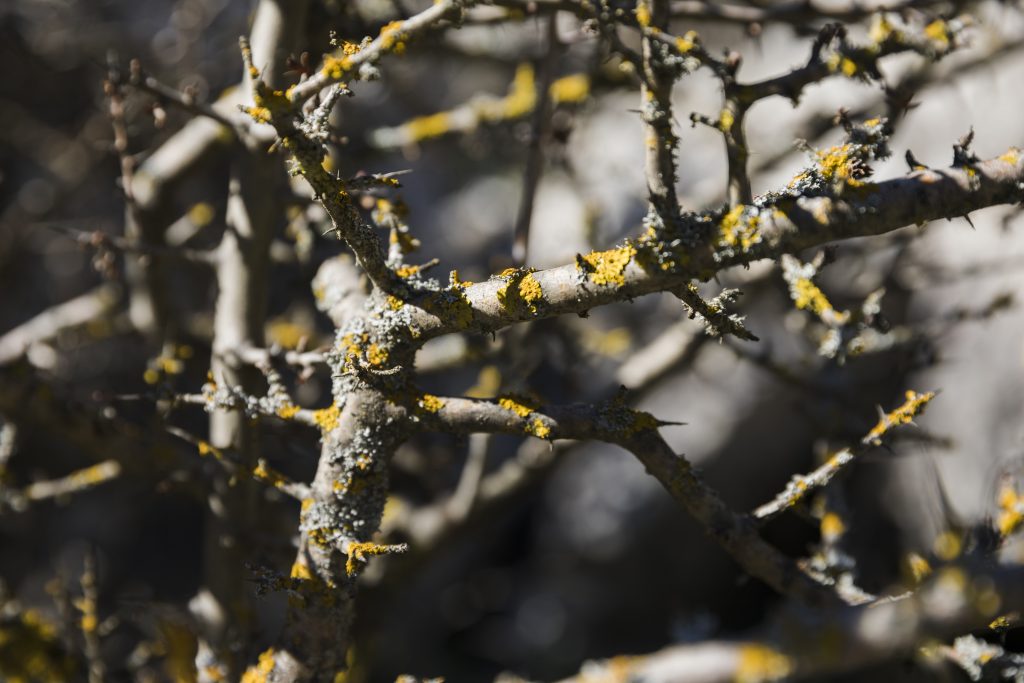
These sharp, thorny, pointy thickets provide excellent cover for pheasants and quail who instinctively know that the plants are nearly impenetrable for humans. Pressed to enter this perilous barbed-wire tangle of vegetation, any reasonable person would “gown up” with 1000 Denier Cordura briar pants, waxed cotton jackets, thick leather workman gloves, and eye protection.
Most hunting dogs don’t have those options, but through selective breeding, a breed like the Wirehaired Pointing Griffon can drive straight into nature’s bayonets to flush birds. Its specialized double coat structure is one of the defining features of the breed, a functional armor rather than mere ornament. What makes this coat so effective is not length or density alone, but a complex, two-part protective system that has been refined over generations for work in brutal cover.
We start with the outer coat that consists of harsh, wiry guard hairs designed to resist penetration and abrasion. These guard hairs are thicker and more rigid than soft or silky hair and tend to have irregular, non-uniform shafts that increase stiffness and reduce flexibility. Instead of collapsing against the body, the hair stands off the skin and functions as a physical barrier. When a thorn or briar presses against the coat, the force is distributed across multiple hairs rather than concentrated at a single point, allowing the vegetation to be deflected outward rather than driven inward.
Think of it this way: Each wire hair behaves much like a spring. Though not elastic in the literal sense, the increased diameter and stiffness of the hair shaft allows it to bend under pressure and then rebound, rather than snapping or folding flat. This creates a resilient, brush-shedding surface that prevents thorns from hooking, holding, or reaching the skin. In practical terms, the coat functions as natural brush armor.
And then there are the dog’s natural skin oils. Sebaceous secretions coat the wire hairs, reducing surface friction and helping hooked thorns—such as those found on blackberry or multiflora rose—slide across the coat instead of catching. This lubricated surface further limits abrasion and hair breakage during prolonged work in punishing cover.
Beneath this rigid outer layer lies a dense, fine undercoat that serves a different but equally vital role. The undercoat consists of soft, downy hairs that trap air close to the skin, providing insulation, shock absorption, and a secondary protective buffer. If a thorn penetrates the outer coat, the undercoat helps prevent it from reaching sensitive tissue. The density of this layer also slows water penetration, helping the dog retain body heat and reducing prolonged skin dampness that can lead to irritation or infection.
Equally critical is what the Griffon’s coat is not. It isn’t soft, cottony, or silky. Yes, soft hair would bend easily and collapse under pressure, but it would also allows thorns to be driven directly into the skin, where they tear the skin and worse, embed in it. A correct harsh coat resists compression and maintains a physical buffer between the dog and hostile vegetation. This is why the breed standard emphasizes texture over length or fullness: a correct coat is one that maintains its integrity under pressure.
So here’s a news flash for anyone just getting to know this breed: Its AKC standard reads, “The required abundant mustache and eyebrows contribute to the friendly expression.” Certainly they do, but the breed’s signature facial furnishings—the eyebrows, mustache, and beard—are simply an extension of this protective system. Composed of some of the stiffest hair on the dog’s body, these furnishings form a functional barrier around the eyes and muzzle. The eyebrows deflect stems and thorns away from the corneas, while the beard shields the lips, whisker beds, and sensitive facial skin. This allows the dog to work nose-first into dense thickets where birds hold tight, unfazed by the stinging lashes of clawing scrub.
In short, the Wirehaired Pointing Griffon’s coat is not decorative, rustic, or accidental. It is a biologically engineered marvel of a solution—refined over generations—by hunters who knew what worked, and what didn’t, for a dog expected to hunt where thorns win, vegetation fights back, and success depends on the willingness to push forward anyway.
Photo of Wirehaired Pointing Griffon by PharmShot/iStock