
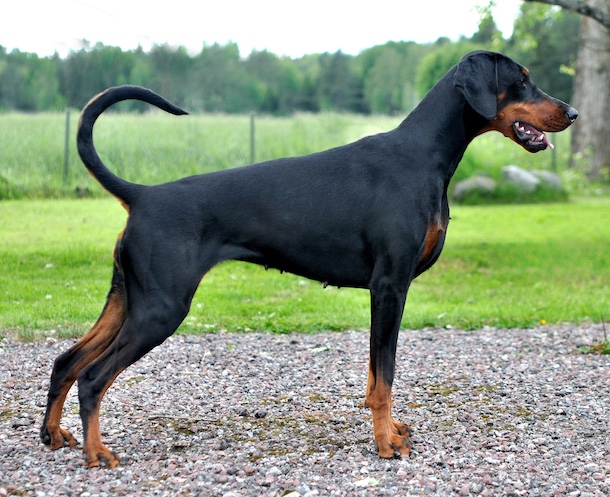
When a group within a larger society has its own terminology, traditions, and, dare we say it, its own culture, it’s not inaccurate to call it a subculture.
And it’s not unreasonable to regard the dog world as one.
Consider show world ‘rituals:’ Watching closing dates, filling out entries, checking classes; finding clothes with pockets, show-week prep; loading crates and packing the car; organizing lucky leashes, towels, and brushes; reserving—or scrambling for—parking, grooming space, unloading, setting up, plugging in, pottying, showing, breaking down, reloading, unpacking—and we haven’t even included handling classes, road work, vet visits, grooming, or the universal, tired drive home. We daresay that if all this effort were condensed into a hyperspeed video, it would become clear: there is a choreography to the sport.
The fancy also has a unique language. We leave to other sources the ‘laundry lists’ of terms and phrases unique to the dog fancy; in this post, we focus on one in particular that can baffle even ‘newbies’ to the sport: The phrase is: “Standing over plenty of ground.”
At least two breed standards use the language (German Shorthair Pointer and Bloodhound), while assorted critiques, breed articles, and illustrated guides allude to the same concept in slightly different words. A person new to the sport, however, might reasonable ask: How can a dog stand over more ground than his or her body physically occupies?
In breed-standard language, “standing over plenty of ground” doesn’t refer to the literal surface area under the dog’s feet, or how many square inches of floor the dog covers. It serves as shorthand to describe an athletic, well-proportioned dog that isn’t “bunched up” and even when standing still, the dog looks like s/he has room to move effortlessly, easily and efficiently. It’s a way of describing a dog that’s built to do its job without looking crowded or compact, a dog with sufficient length of body and correct leg placement to support balanced movement without appearing compact or crowded.
To a child standing ringside, we might explain the term in this simplest of ways: “That first dog looks like a little bench—long enough between the legs to move easily. The other one, though, is more like a small footstool: everything’s a bit too close together.”
In a different post written a while back, we covered this using the GSP to illustrate:
Top image of a Swedish Doberman Pinscher, Jean Dark Snö of Sweden, by Felill – Own work, CC BY-SA 4.0, https://commons.wikimedia.org