
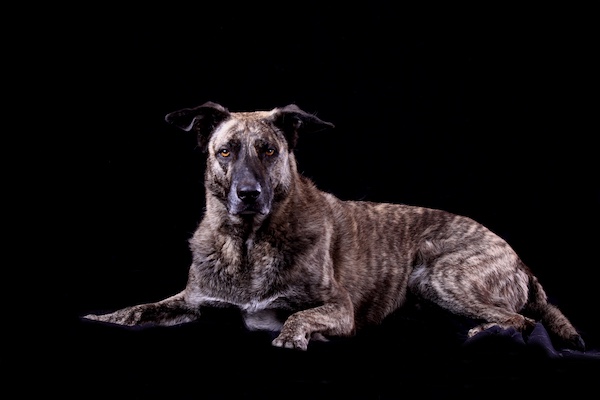
Color in the ancient Portuguese livestock guardian dog known as the Cão de Castro Laboreiro is not a superficial detail, it is one of the breed’s defining ethnic traits and one deeply rooted in both geography and tradition. The most common color in the breed is what is broadly described as wolf-colored, but among owners, breeders, and locals in Castro Laboreiro, the most prized and preferred shade is known as the “mountain color.” The name is less romantic embellishment and more a reflection of generations of selective breeding shaped by practicality, purpose, and natural concealment in a demanding mountain landscape. The mountain color is considered emblematic of the breed’s identity, something immediately recognizable to those familiar with these dogs and the landscape that shaped them.
Technically, the color is a complex brindle coat built on a base of grey, which can range from pale ash to deeper slate tones. Over this grey foundation lies a network of black brindling, appearing in both lighter and darker shades depending on the area of the body. What makes the Cão de Castro Laboreiro particularly distinctive is that the coat often displays three separate colour tones within a single dog. Individual hairs may shift from pine-nut brown to reddish hues and even into warm mahogany, creating a layered, almost weathered appearance that mirrors the rocky terrain and scrub of northern Portugal.
The distribution of the brindling is not random. Darker shading typically concentrates on the head, back, and shoulders, lending the dog a powerful, wolf-like presence when viewed from above or at a distance. The body, croup, and thighs usually show a medium level of darkness, while the belly and the lower portions of the limbs tend to be lighter. This gradation enhances the breed’s natural camouflage and contributes to its unmistakable silhouette, particularly when the dog is moving through mountainous terrain or standing watch over livestock.
A small white marking on the chest per the FCI standard is permitted and occasionally seen, but it is secondary to the overall impression of the coat. What matters most is the harmony of tones and the unmistakable “mountain color” effect—subtle, rugged, and entirely functional. This coloration is not about ornamentation; it is a visual record of centuries of adaptation, selection, and survival. In this breed, color tells the story of a breed shaped by landscape, labor, and the practical needs of a working guardian dog largely unchanged by modern fashion.
Photo of a Castro Laboreiro Dog by Petra Eckerl/Adobe