It is probably fair to say that, outside of pedigreed purebred dogs, most named “types” of dogs—so‑called designer dogs—are created for reasons that have little to do with filling a functional niche. There are certain service dog organizations, competitors in the agility world, serious hunters, and a few others that have their reasons for mixing breeds to create a “better mousetrap” to fit specific needs, and though he regrets it now, Wally Conron also had his reasons for blending Poodles with Labradors.
Other “breeders,” however, have less noble objectives.
That said, many of today’s respected breeds got their start much the same way: to fill a functional need. The key difference is that a clearly defined goal, followed by generations of purpose‑bred dogs proving consistent, predictable type and function, separates many of today’s established breeds from the average “poo” or “doodle.”
And nowhere is that more evident than on the Northumbrian moors, in the story of the Robson family and the rough‑coated terriers they bred to support their foxhounds and bolt fox.
The Robsons, especially John and his descendants, played a central role in shaping the Border Terrier into the distinct working breed we know today. One family’s practical needs on the hunt turned local rough‑coated terriers into something we find pretty special today. It wasn’t a sudden invention; these dogs evolved from the hardy fell terriers that farmers and huntsmen had used for generations to control vermin and bolt foxes in the Border country.
John is often credited in later accounts with helping to develop what became known as the Border Hunt in the mid‑19th century, working alongside John Dodd of Catcleugh. They needed reliable terriers to support their foxhounds across the moors and fells near the Scottish border. The irony is that the Robsons may have regarded themselves first as houndsmen; their terriers were indispensable members of the hunting establishment, but it was the foxhound pack that sat at the center of the enterprise.
These terriers had to be game, tough enough to go to ground, and be built with the stamina to keep up with horses and longer legged hounds. The Robsons and Dodds selectively bred for those key traits without benefit of DNA testing. Common sense was their guide: A hard, wiry coat that shrugged off harsh weather, a strong jaw, short back, straight legs, and that ideal size—early on, about 15 to 18 pounds in working trim. Some early writers also mention preferences for red or mustard‑toned dogs and speculate about differences in scenting ability, but we suspect those stories should be considered as opinions rather than proven facts. But hey, if a reader knows otherwise, let us know!
Jacob Robson— thought to be John’s grandson—recalled top examples from the late 1850s and early 1860s at East Kielder, including a small mustard dog named Flint, whom he considered the best fox‑bolter he had ever seen. These were working partners, refined for the real demands of the Coquetdale and Reedwater country.
The family passed this down from father to son, keeping their lines strong across generations. By 1879, Jacob Robson had become joint Master of the Border Foxhounds with E. L. and Simon Dodd, a post he held for decades. Their success with both hounds and terriers helped the name “Border Terrier” gain currency in the later nineteenth century for these Coquetdale/Redesdale dogs. Jacob owned influential dogs like Chip, who in 1912 sired The Moss Trooper, the first Kennel Club‑registered Border Terrier, listed in 1913 under “Any Other Variety.” Together with John Dodd’s grandson and other enthusiasts, the Robsons helped draft the first breed standard and pushed for official recognition, which finally came in 1920 after an earlier application was rejected in 1914. Jasper Dodd became the first president of the Border Terrier Club. While families like the Hedleys also preserved early lines, the Robsons and Dodds are widely credited with doing the most to establish the breed as we recognise it today.
Their direct involvement stretched into the early 20th century, but tracing specific descendants today quickly gets tricky. Robson is a common Northumberland name with deep Border‑Reiver roots, and public breed histories focus more on the dogs than on full family trees. In the specialist sources I found, there is little evidence of prominent Robson descendants currently breeding Border Terriers or leading major hunts. By the mid‑20th century, the breed had spread widely among working and show enthusiasts, and its custodianship broadened beyond the original hunting families.
In the end, the Robsons didn’t just own terriers—they refined a type born of necessity into a recognized breed that endures for its gameness and character. From John and Jacob’s time right through to formal Kennel Club status, their hands‑on, multi‑generation approach made an outsized difference. While the family’s direct dynastic influence on hunts and large‑scale breeding may have faded as the breed has become more widespread, the spirit of those Northumberland moors still defines every good Border Terrier. For anyone wanting to go deeper, breed‑club publications and writers who quote voices like Jacob Robson and Anne Roslin‑Williams bring those early days vividly to life—and remind us that the best dogs often begin with a job to do, not a cutesy name.
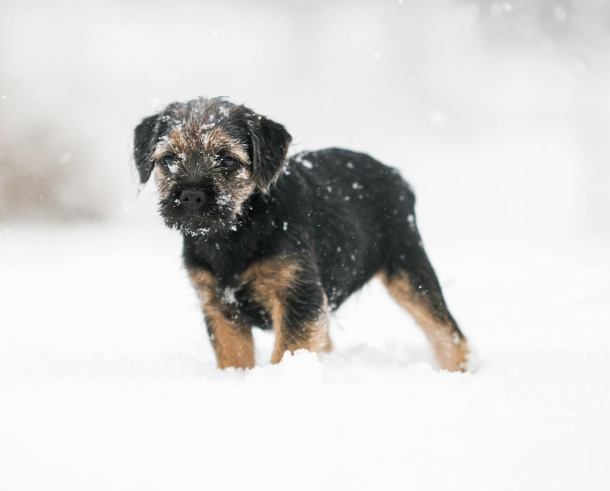
Image of a Border Terrier puppy by Tanika Pietilä