The world of officially recognized purebred dog breeds got a little bigger in February 2026 when the Macedonian Shepherd Dog Karaman got provisional recognition from the FCI (side note: the Fédération Cynologique Internationale, headquartered in Belgium, is the largest international federation of national kennel clubs).
The official date of recognition for breed No. 378 was February 11, 2026, but for a dog whose livelihood has been protecting sheep for centuries, this was a new designation—hardly a new job.
And this is a good time to pull you aside for another side note, because the FCI’s numbering can be misleading. No. 378 identifies the Karaman’s breed standard—not a tally of recognized breeds. In other words, it doesn’t mean the FCI recognizes 378 breeds. The FCI’s own website currently reports 364 recognized breeds, even though the Karaman’s standard is numbered 378.
Another thing: provisional status matters. The Karaman is officially accepted into the FCI system and can be shown at its international shows, but it can’t yet receive the CACIB certificate toward an FCI championship. Definitive recognition requires a further application after at least ten years and five generations, supported by documentation of the breed’s development. It isn’t an automatic promotion when the calendar reaches 2036.
Now, about the dog.
Those unfamiliar with dog breeds may think that “Shepherd Dog” means a dog that gathers sheep or moves them through a gate. Au contraire!
The Karaman’s stated job description is to protect sheep and property, and that makes it a livestock guardian dog, or LGD. Its standard describes an independent guardian, reserved with strangers and determined and brave when working. The FCI specifically names sheep. We haven’t verified whether guarding goats or cattle was also part of the Karaman’s traditional work.
The Karaman’s history follows the livestock keepers who moved between summer and winter pastures. The FCI describes a dog equipped to work in both very low and very high temperatures, with a strong body, energetic movement, firm pads, and dense, rough hair over a well-developed undercoat. The standard reflects a dog expected to earn its keep outdoors, not merely look the part.
There is a detail in the coat description that we find interesting. The hair is longest at the withers, where its average length is given as 9.5 centimeters, or approximately 3¾ inches. That is an average, not a requirement that every dog’s hair measure exactly the same on those rulers we all happen to have in our pockets. The standard also notes that length varies with climatic conditions and provides no measuring procedure.
The breed’s historical account offers another attention-getter: a connection to a medieval fresco. The FCI identifies a dog depicted at St. George’s Church in Kurbinovo, where fresco painting began in 1191, as a Karaman. It also says the image was incorporated into the breed club’s logo. We’re working on finding an image we can share.
There is independent expert support for the shepherd dog in the painting. In a publication issued by North Macedonia’s Cultural Heritage Protection Office, art historian Elizabeta Dimitrova describes a dog watching over a sheep pen in the Nativity scene. What her account doesn’t do is identify its breed. The painting documents a medieval shepherd-dog image; calling that dog specifically a Karaman is the modern breed standard’s interpretation, not proof of an unbroken pedigree stretching back more than eight centuries. We’d love for that painted dog to be a Karaman. For now, we’re keeping the appealing possibility separate from what the evidence establishes.
That said, getting the living dogs to this point took considerably more than finding an old painting.
Brothers Vlatko and Marjan Kostovski figure prominently in the preservation effort. A 2025 expert-authored study describes nearly a decade of observing shepherd dogs in Macedonia’s mountains before the early 2000s, the brothers’ detailed book on the Karaman, and the establishment of a preservation club in 2004. The club became a full member of the Macedonian Kennel Association. That association records the breed’s first official presentation at its May 9, 2010 show.
This wasn’t fluff. There was research behind the recognition. The 2025 study examined body and head measurements in 221 Karamans—126 males and 95 females—all with pedigrees issued by the national kennel organization. Its authors included researchers Milivoje Urošević and Darko Drobnjak, Marija Karova, and Macedonian Kennel Association president Jordan Hristovski. By then, this was already a documented pedigree population, not simply a collection of similar-looking dogs lollygagging as they awaited a name.
Saying the FCI turned a landrace into a purebred would oversimplify what really happened. The recognition process requires evidence of distinguishable, heritable characteristics, documented ancestry, genetic diversity, a planned breeding program, and health and behavior assessments. The published record shows a sustained preservation and standardization effort. It does not reveal the complete Karaman application or justify crediting every part of the successful submission to one person.
As much as we enjoy a splashy headline, we can’t call the Karaman North Macedonia’s only native FCI-recognized breed. The Šarplaninac, officially listed as the Yugoslavian Shepherd Dog–Sharplanina, already has definitive recognition, with North Macedonia and Serbia jointly named as its countries of origin. The distinction is that the Karaman’s listing names North Macedonia alone.
Registration also predates February’s announcement: those nationally issued pedigrees make that clear. FCI acceptance now provides for registration in the appropriate studbooks of its member organizations, but it should not be mistaken for separate recognition by every independent kennel club or registry. We haven’t verified separate recognition by other independent kennel clubs or registries.
For the Karaman, then, February’s news was an international milestone in a much longer story: shepherds preserving a working dog because it did what they needed, enthusiasts documenting it, and an organized breeding community securing a place for it in the FCI system.
The recognition is new. The dog’s purpose is not.
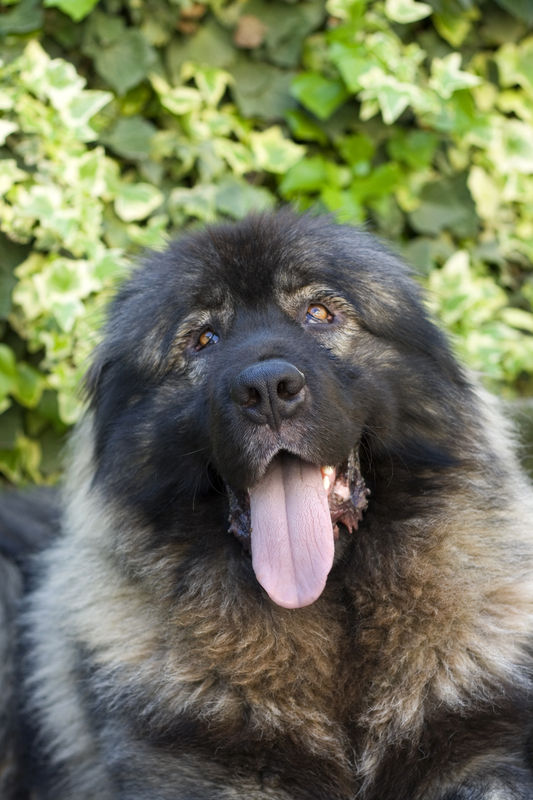
Photo of a Macedonian Shepherd Dog by ©Elena Milevska | Dreamstime