A Fishy Deerhound Story

How a fish launched a Scottish Deerhound to Westminster.

Scottish Deerhound history has its share of unexpected turns, and George Shepard Page’s story begins with a fish. Not the usual route to a dog show, but George Shepard Page’s introduction to Scottish Deerhounds apparently began with black bass. According to the American Kennel Club’s archival guide, his work introducing the American fish overseas earned him an unusual thank-you from the Duke of Sutherland: two Scottish Deerhounds from Dunrobin Castle.

Fish went one way; hounds came the other.

Page was no casual fisherman. A businessman whose fortune came from coal-tar products, he also served as president of the American Fish Culturists’ Association, a predecessor of today’s American Fisheries Society. Fish propagation was a serious interest, not merely something to occupy a gentleman between business appointments.

The dogs evidently made an impression on the man. Page named his kennel Dunrobin after the Scottish castle from which the Duke’s gift hounds came, but Page and his son, Albion, established their breeding operation at his New Jersey home The AKC guide dates their first litter to 1884. Two years later, Bonnie Robin was registered as No. 4345—the first Scottish Deerhound registered by the AKC, according to the organization’s historical account.

And Westminster?

There is a paper trail. The surviving records include award certificates earned by the Pages’ Scottish Deerhounds and Greyhounds, particularly at Westminster. This was not simply a story about a duke’s gift becoming a treasured household companion. The Pages became breeders and exhibitors whose dogs earned recognition in the show ring.

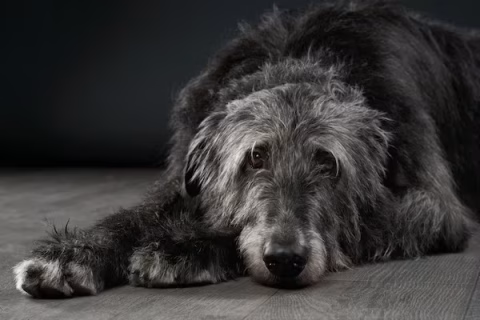
Among their dogs was CH Olga, whelped in 1886. Page’s description gives us considerably more than a name on a pedigree. She stood over 30 inches at the shoulder, was silver-grey with hazel eyes, and combined courage with a kindly disposition toward her friends. He called her “a queen of her kind.”

The records have a story of their own. Page’s Breeder’s Pedigree Book was a gift from the Duchess of Wellington when he purchased the Deerhound Bruar II. Alongside pedigrees, correspondence and clippings, the book preserved his personal observations of individual dogs. His kennel diary recorded breeding efforts, puppies, show results and expenses—even the food bills. Dukes and duchesses may figure in the story, but as we all know, somebody still had to feed the dogs.

Page’s great-granddaughter, Elizabeth Sanfilippo, donated the collection to the AKC in 2008, preserving both the accomplishments and the everyday workings of an early American kennel.

So while a black bass didn’t literally lead a Deerhound into Westminster, an interest in fish helped bring two hounds into Page’s life and, by a rather roundabout route, helped launch a kennel with Westminster ribbons to its credit. That kennel left its records, and its ribbons, behind—and that’s a fish story we like.

Leave a Reply

Your email address will not be published. Required fields are marked *

*
*
Website