Koalas, notoriously difficult to spot, have a particular knack for being hard to find precisely when it matters most. Sitting high in a eucalyptus canopy, a koala can blend into its surroundings remarkably well. Researchers at the University of Newcastle describe them as monstrously challenging to detect, with traditional searches using spotlights or recordings of their calls demanding considerable time and effort. Knowing there are koalas in a forest is one thing. Finding ones that need help is another.
There are good reasons to look. Habitat loss, disease, drought, bushfires, vehicle strikes and dog attacks all threaten these charming creatures. Australia’s endangered listing applies specifically to the combined populations of Queensland, New South Wales and the Australian Capital Territory, not to every koala population across the continent. But locating these animals helps conservationists understand where they remain, while finding individuals after a disaster can make rescue and veterinary treatment possible.
Sometimes, the best answer to an animal hidden above is a dog working below.
Australia already knows what such a dog can do. His name is Bear.
Bear, an Australian Koolie, was one of the first dogs in Australia trained on the scent of live koalas’ fur. Before he became a conservation hero, his boundless energy and obsessive love of play made him hard to keep in a home. IFAW says he went from chewing the walls of a Gold Coast apartment to searching the Australian bush. Then came the Black Summer bushfires of 2019–2020. Searching land left scorched by the fires, Bear found more than 100 koalas, many of them needing veterinary care. His red fire-protective boots became famous in their own right.

Bear hung up those boots in 2026 after a decade of service and at the age of eleven. He now lives on Queensland’s Sunshine Coast with one of his former handlers, his tally now counted in belly rubs and games of fetch, not how many koalas he found.
Bear’s retirement left a gap, however, and IFAW went looking for a dog to fill it.
Enter Oaka, a two-year-old Australian Koolie from New South Wales. On September 30, 2026, the International Fund for Animal Welfare announced that she had been selected to begin training to find live koalas. Her prospective employers, so to speak, are IFAW and Innovation for Conservation, the organization whose director, trainer and handler Russell Miller is helping prepare her for the job.
IFAW notes that Oaka has “a strikingly similar background to Bear.” She didn’t arrive at this opportunity by being an easy household companion. Her previous family surrendered her after finding her too much to handle. DM Rescue and trainer Avery Keller saw something worth developing, however, and submitted her application when the conservation team began looking for a new dog. Video evaluations were followed by in-person testing on Queensland’s Sunshine Coast.
What caught Miller’s attention? Among other things, Oaka covered ground looking for her ball with wicked ease.
“She can already easily search the area and recover her ball, now we have to transfer this into the search for the odour of the koala (fur),” he explained. Miller also credited her Koolie breeding as particularly suitable for the work. That is his assessment of this dog’s potential, not a guarantee that every Koolie would qualify.
The ball isn’t a frivolous beginning. It is the starting point for teaching Oaka what to search for, with exercises progressing toward finding koala fur. Her training also involves IFAW’s director of canine units, Frédéric Chappée.
There is a wrinkle: finding a live koala isn’t the same assignment as finding its droppings. IFAW explains that a koala may be many meters up a tree while its strongest scent lies on the ground, well away from the trunk. A dog has do more than locate that tempting concentration of odor; the task is to help pinpoint the animal itself.
Those are substantial pawprints to follow, and Oaka is not yet following them into the field. IFAW describes her strictly as a dog in training. It says her training is being fast-tracked, but it has announced no completed qualification and no deployment date. The journey, in IFAW’s words, runs “from mastering the basics, to her first real search and rescue.”
For now, hers is a story of promise: a dog whose enthusiasm overwhelmed one household is getting a carefully assessed chance to put it to work, much as Bear once did. The ball may be the beginning. The hope is that a koala in need will eventually be at the other end of the search.
As an aside for anyone wondering: We include the Koolie on our pages because recognition does not always precede a breed’s contribution. Many working breeds have served their communities and done their jobs long before gaining formal kennel-club recognition. We think their heritage is worth exploring along the way
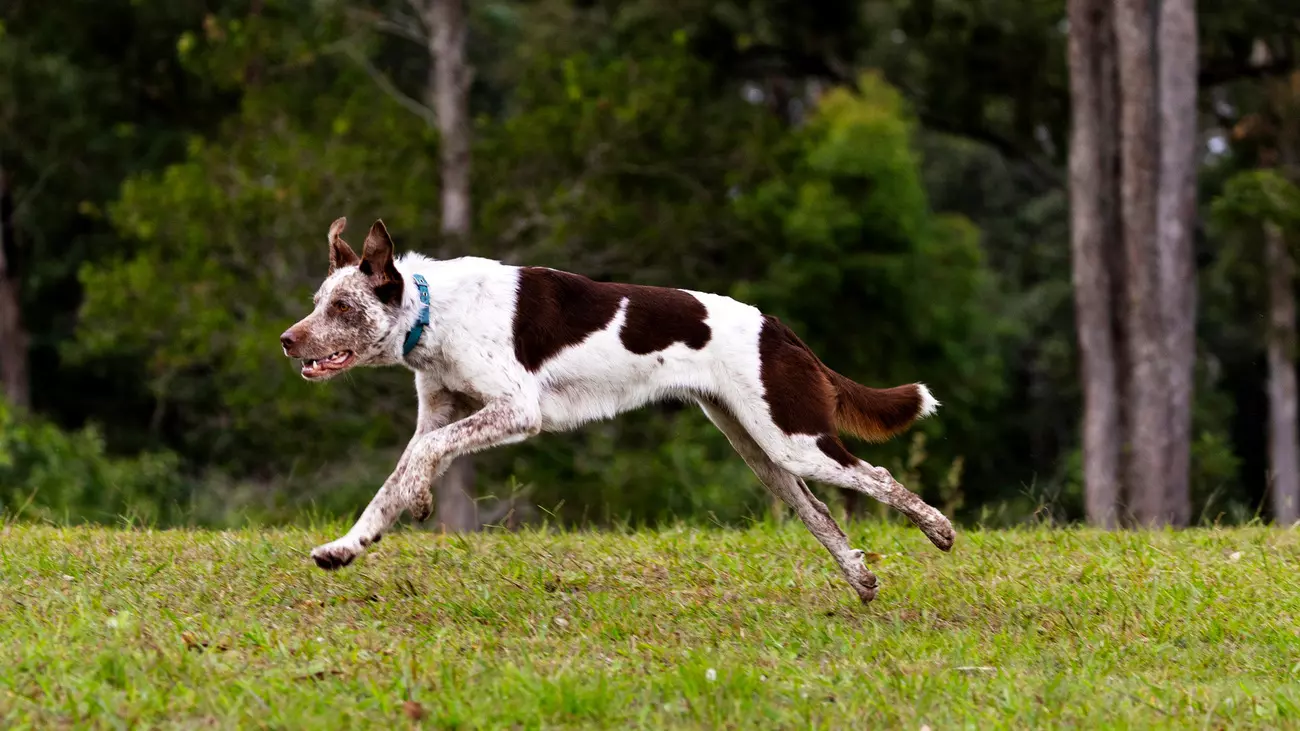
We don’t have permission to share Oaka’s photo in this post, but you can see her here: Her “placeholder” is a photo of a Koolie by Chris Black/Pexels