

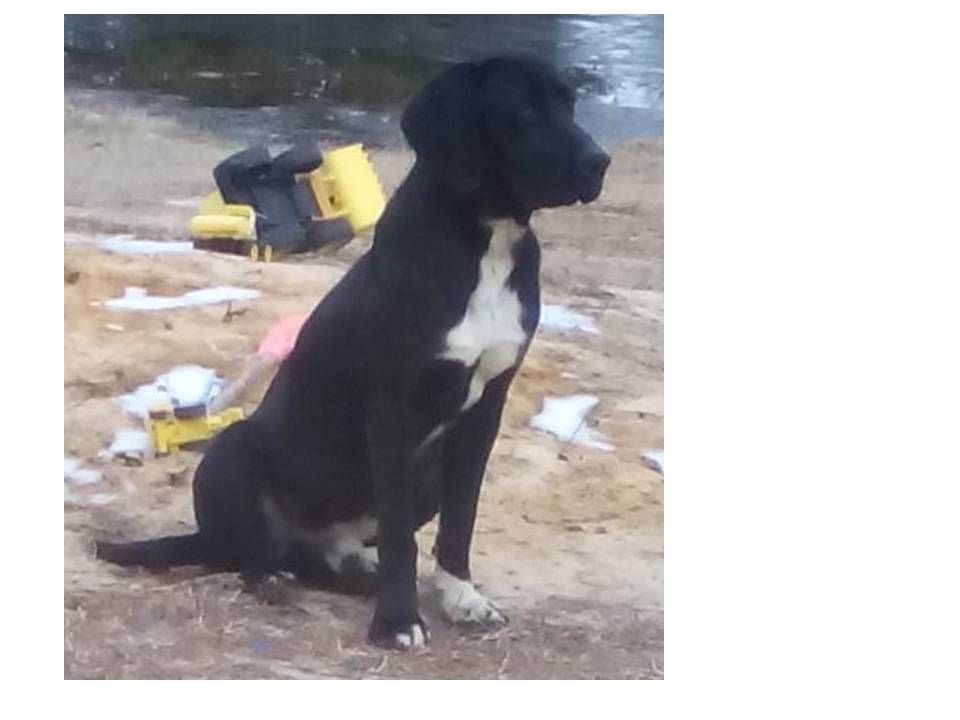
The beloved Labrador Retriever is a solid-colored dog because of a dominant gene (S) for solid coats, but some dogs may carry recessive alleles that allow white spotting. This is reflected in the AKC breed standard which provides for a small white spot on the chest being considered permissible —but not desirable.
The white spot is due to a lack of pigment cells in certain areas during embryonic development. Put another way, a white spot (or even a blaze) may occur because of incomplete suppression of white markings by the genes responsible for the solid coat. Pigment cell precursors migrate from the neural crest to cover the dog’s body, and if the migration is incomplete, it can result in white patches where pigment cells did not reach. A more pronounced “tuxedo” blaze suggests a stronger influence of these spotting genes, possibly due to heterozygous genotypes (S/s) or polygenic modifiers. One doesn’t usually see chest spots in show dogs, but larger markings may appear in the litters of breeders who may be more casual about meeting the breed standard.
Breeders with a grasp of their breed’s history will recognize a white spot as a natural genetic variation of recessive alleles inherited from a now extinct ancestor, the St. John’s Water Dog, where such markings were common. Native to Newfoundland, the versatile St. John’s Water Dog was known for its working abilities, but it had a varied coat appearance that often included white markings or patches, particularly on the chest, legs, or face, likely linked to genes like the S-locus (spotting locus) or MITF, which regulate pigmentation patterns.
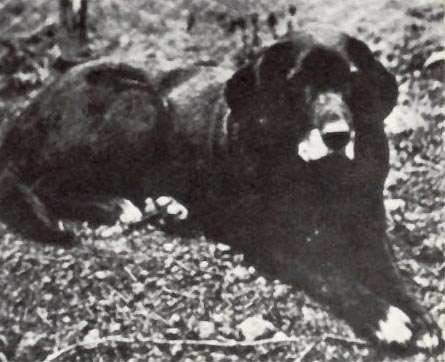
Photo of St. John’s Dog “Nell”, taken 1867. Nell was born in 1856 and owned by the Earl of Home (1799-1881). The photograph shows Nell at the age of 11. The photo is in the public domain
When Labradors were developed in 19th-century England from St. John’s Water Dog stock, breeders selected for solid coat colors to standardize the breed’s appearance – but those recessive alleles for white spotting remained in the gene pool and to this day, can surface when two carriers of the recessive spotting allele (e.g., S/s genotype) produce offspring, leading to white markings like the chest spot.
The photo at the side shows “Nell,” but there is a photo in the book, y Mike Loades of “Lassie,” one of the last two remaining St. John’s Water Dogs. Lassie (a male) was found at Grand Bruit, an outpost on Newfoundland’s south coast He was 13 years old at the time, and the other St. John’s Water Dog was Lassie’s 15 year old brother. The photo was taken in 1981, though by the mid 1970s, the breed was essentially extinct. Sheep farming had been introduced to the area in the late 19th century as a way to boost the local economy, and to encourage the practice, the Sheep Protection Act of 1885 levied a massive dog licensing tax for non-sheepdogs. It had already been common for fishermen to let their dogs roam when not working, and it didn’t end well for dogs or sheep when the dogs formed packs in their “off season.” Sheep predation escalated, and dogs were shot.
We view the loss of a breed as a tragic event, but historic accounts of the St. John’s Water Dog make its demise especially regrettable. This seemed to be an exceptionally talented dog, and all we have left of it today is the occasional white chest spot.
Top photo a Labrador Retriever with a tiny white chest spot by form PxHere
A poignant reminder of why details that flare up from a generic history should be viewed as a gift and not a problem….