
In the beautiful village of Kongthong in Meghalaya, India, every person has two names: one is spoken, the other is hummed or cooed. The tradition, known as ‘Jingrwai Lawbei’ in the local Khasi language, translates to “whistling lullaby.” When a baby is born, or even before, the mother invents a tune. It has no meaning other than that it comes from the heart and honors the matriarchal head of the clan. This melody – the child’s “song name” – becomes his or her identity, a personal sound unique to them as no two tunes in Kongthong are alike. There is a long version of the tune sung mostly in forests to ward off evil spirits, while the short version is used at home. More than just establishing individual identity, the songs embody clan lineages and collective memories.
It’s quite extraordinary. You can see it in action in the 5 minute video below:
Sadly, the custom is losing ground to outside influences.
In her article, “Jingrwai Lawbei in Meghalaya: A Distinctive Intangible Heritage under Legal Protection,” Puja Khetawat, a research scholar in the Department of Law at North-Eastern Hill University (Shillong, Meghalaya), argues that Jingrwai Lawbei deserves far stronger legal recognition. Although the Indian government and local communities have shown interest, the practice has not yet been added to UNESCO’s Intangible Cultural Heritage list which seems unfair given that whistled languages such as Spain’s Silbo Gomero (which we wrote about here) has been. Khetawat urges legal safeguards, the inclusion of the tradition in school curricula, the formation of community-led archives, and a UNESCO nomination to ensure the long-term survival of this rare and deeply rooted musical naming practice.
It isn’t too large a leap to pivot from an at-risk language to another endangered Indian treasure, its indigenous dog breeds. Early research, notably by veteran conservationist, S. Theodore Baskaran, catalogued approximately 50 historic native breeds, but only around 25 remain well-documented today. Only a handful of them—such as Rajapalayam, Chippiparai, Mudhol Hound, and more recently the Gaddi dog—have been officially registered by India’s National Bureau of Animal Genetic Resources. In short, very few of India’s native breeds have institutional support, many are under threat from population decline and cross-breeding, and urgent conservation efforts are needed to preserve India’s unique canine heritage.
As we write, perhaps no breeds are more vulnerable than the Haofa (Tangkhul Hui), Bakharwal, and the Jonangi, but a 2024 peer-reviewed study in the Indian Journal of Animal Sciences published in April 2024 narrows things down as it is the “freshest” reporting of the three breeds.
The study examined 100 adult Haofa dogs (50 males, 50 females) to document morphology, breeding patterns, and distribution in Ukhrul and Kamjong districts of Manipur. Local conservationists’ estimate of approximately 1,000 Haofa across 238 Ukhrul villages aligns with a report from 2022. The study confirmed a “critical level” of decline. Active safeguards include the Phungcham Haofa Lovers’ Association formed in 2021, a 2021 resolution in the village of Phungcham declaring that the Haofa would be the only breed allowed to be raised in the village, and limited sales of female puppies outside Phungcham to preserve genetics. The Phungcham Haofa Festival every December also raises awareness by showcasing the breed.

In December 2022, the Haofa breed’s registration with the Indian Council of Agricultural Research – National Bureau of Animal Genetic Resources (ICAR-NBAGR) was in its final stages, and as of 2025, sources like NDTV and the Economic Times reported ongoing promotion through official assessments and adoption by the Assam Rifles, though the formal government notification had not yet been published, according to ICAR’s 2024 annual report.
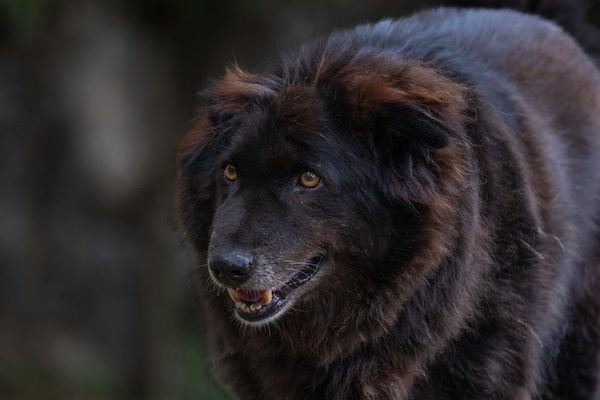
In comparison, while the Bakharwal dog is similarly rare, the most reliable data comes from older surveys, such as a 2009 study by the Tribal Research and Cultural Foundation, which found only a few hundred individuals remaining. The Jonangi, meanwhile, lacks recent peer-reviewed census data at all, and while sources indicate population decline due to changes in traditional livelihoods like duck farming, no precise population estimates are available. We continue to look.
Our image is of a Bakharwal by©Wirestock/Dreamstime