
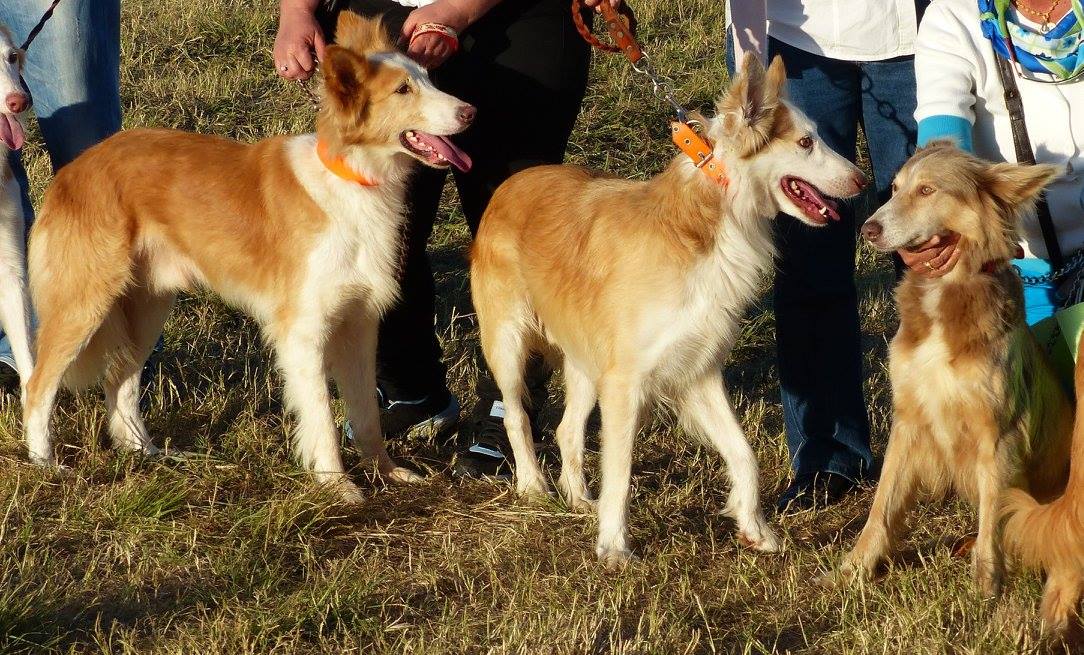
The Barrocal Algarvio, also known as the Cão do Barrocal Algarvio, is native to the Barrocal sub-region of Portugal’s Algarve. It has a rich heritage, but its recovery from near extinction is remarkable. The breed traces its origins to the Arab occupation of the Iberian Peninsula between the 8th–13th centuries, a time when sighthound-like dogs, possibly descended from ancient Egyptian Greyhounds brought by Phoenicians and Berbers, were introduced and possibly traded. The Barrocal Algarvio’s lineage may have involved historical crossbreeding with breeds like the Portuguese Podengo, contributing to its unique genetic profile, but it is now recognized as a distinct, purebred breed.
The Barrocal, a rabbit-tracking specialist, is renowned for its exceptional hunting prowess. With its slender build, almond-shaped eyes, pointed ears, and a medium-length coat, the breed’s distinctive sickle or scorpion-shaped and fringed tail and paws have earned it several local nicknames including, “abandeirado” (flagged), “fraldado,” “felpudo” (hairy), and “gadelhudo.”
In the 1960s, the Barrocal Algarvio was teetottering on the brink of extinction, and guesstimates were that few as few as 30 – 50 dogs remained. By 2004–2006, the Associação de Criadores do Cão do Barrocal Algarvio was established to reverse the alarming decline. In 2008, with support from the Algarve Hunters Federation, blood samples were collected from some remaining dogs for DNA analysis, and they confirmed the breed’s genetic homogeneity and diversity comparable to other Portuguese breeds.
A molecular genetic study initiated in 2012 further validated these findings, solidifying the breed’s distinct identity. By 2016, the Barrocal Algarvio earned official recognition from Portugal’s Direção-Geral de Alimentação e Veterinária, an important milestone as it acknowledged the Barrocal as the 11th indigenous Portuguese breed. As of this writing, there is an ongoing effort to gain recognition from the Fédération Cynologique Internationale (FCI).
In 2016, the Cão do Barrocal Algarvio Facebook page posted this video, and though narrated in Portuguese, it is well worth the watch:
Another interesting Facebook post from 2024 put up by Tom&Co Athus further “fleshes out” information about this interesting breed:
As is the case with so many old breeds, many existing sources on the origin of this breed are based on oral tradition, some dating back more than two hundred years.