A well known trope in the dog fancy is that the average duration of a person entering the sport is 5 to 7 years. It’s about the time it takes for someone to finish their first dog, have a litter, and then discover with their next show prospect that in many ways, they were fortunate or lucky the first time. It’s also about the time that initial enthusiasm runs head first into financial issues, burnout, changing interests, or realizing just how demanding the sport can be.
Those who stick around long enough to become veterans will have seen many changes in their show careers. For our part, we well remember how long it took to get through group because our Puli was part of the Working Group back in the day. Mercifully, the American Kennel Club formed the Herding Group in 1983, but even now as we write, there are always discussions about forming different groups including a Primitive Dog group, splitting sighthounds from scenthounds, creating a Molosser group for mastiff-type breeds, and establishing a Spitz group for northern and arctic breeds. These are entertaining after-show discussions, but they do reflect the ever-evolving nature of the sport as new breeds are recognized and the diversity within existing groups continues to grow.
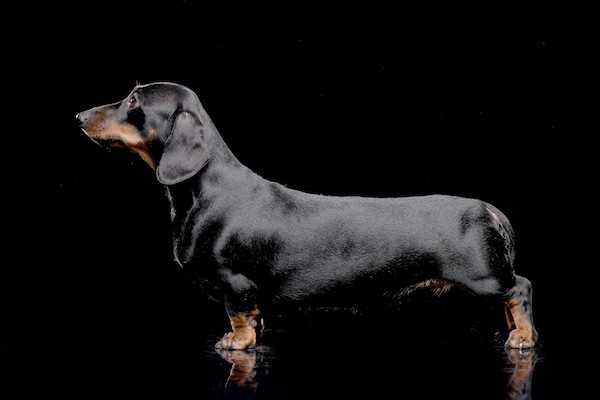
It’s hardly new, the concept of forming new groups, splitting existing ones, or removing a breed from one group, and putting it in another better suited to its function. And that brings us to the Dachshund.
Did you know that when the AKC created the group system in 1905, Dachshunde (the plural form in German) were assigned to the Sporting Group? There were only two other groups at the time, the Non-Sporting Group, and the Terrier Group. Eight years later, terriers were parceled out to Sporting and Non-Sporting, reducing the number of groups to two. In essence, all hunting breeds, including Dachshies and the Smooth Fox Terrier, were moved to the Sporting Group.
In 1923, the AKC expanded the number of groups to five!!! Now we had Sporting, Non-Sporting, Terrier, Working, and Toy. Can you spot what’s missing? Hint: It begins with H and ends with D.
Under this system, however, Dachshunds were moved to the Working Group!
It wasn’t until 1930 that the AKC split the Working Group into two which created the Hound group. Dachshunds went from the old Sporting Group to join sight and scent hounds, and the new group debuted at Westminster that same year.
The ever-changing landscape of AKC group classifications resulted in a remarkable distinction for the Dachshund: it is the only breed to have captured Best in Show honors from the Sporting, Working, and Hound groups. This is a singular achievement—one that is unlikely to ever be repeated.
Our thanks to Tracy Freeling for having shared this fun fact with us!
Image: Getty Images for Unsplash+ licensed under the Unsplash+ License
Thank you for sharing it on NPBDD!