Those of us who have spent years in the dog world sometimes forget just how much we know—or, conversely, how little the general public may understand by comparison. The concept of the “flag tail” provides a perfect example, especially as illustrated by the AKC Dachshund breed standards.
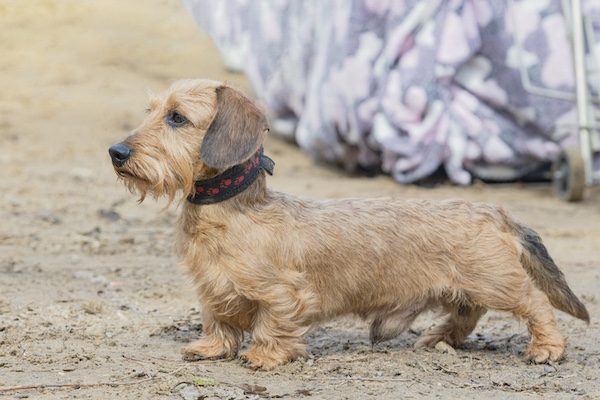
From the Wirehaired Dachshund AKC standard section on tail: A flag tail is a fault.
From the Longhaired Dachshund AKC standard section on tail: Tail – Carried gracefully in prolongation of the spine; the hair attains its greatest length here and forms a veritable flag
To review, a flag tail is a type of dog tail where the hair is long, flowing, and feathered, resembling a flag:

Longhaired Dachshund with flag tail by ©Sally Wallis/Dreamstime
It can be perplexing to those unfamiliar with breed standards (let alone a conformation ring) how a flag tail is considered a fault in one Dachshund coat variety but is perfectly acceptable in another. Even after highlighting the clear differences between the coat types, many people still struggle to grasp the logic behind this rule. However, once the reasoning is explained, it often suddenly makes sense. You can almost see the light bulb go off.
All Dachshunds were originally bred in Germany to hunt badgers and other burrowing animals. The longhaired coat was the result of selectively breeding smooth coated Dachshies with varying coat lengths to help the dog withstand colder weather during hunts. As it happened, the “sleek, glistening, often slightly wavy hair” of the longhair also gave the dog a smart and luxurious appearance.
The Wirehaired Dachshund, on the other hand, was specifically created to have a thick, rough outer coat that would not only provide insulation, but protect the dog from brambles and undergrowth that easily tangled a longhaired coat. While a flag tail complements the elegance of the longhaired variety, it is considered a fault in the wirehaired variety because it indicates a deviation from the desired harsh, functional texture.
Understanding the reasoning behind breed standards highlights the careful balance between function and appearance that guides responsible breeders. While some distinctions may seem puzzling at first, they are deeply rooted in the unique histories and working purposes of each coat type. By educating both new fanciers and the general public about these nuances, we foster a deeper appreciation for the thoughtful development of our breeds and why we are do keen to protect them.
Image:Wirehaired Dachshund by Andrey Kanyshev/iStock