Channeling Dr. Seuss: Oh, the colors you would see, from A to Z and in between!
South Carolina has a rich and unique culture, and part of its story can be told through the colors that one can encounter along its coastlines, its crafts, and on porches where history still lingers.
Among the Lowcountry’s most enduring treasures are the sweetgrass baskets of the Gullah Geechee people, descendants of West and Central Africans brought to the southeastern coast as enslaved people. In their hands, coils of sweetgrass, palmetto, bulrush, and pine needles were woven into poetic vessels of memory and survival, shaped over more than three centuries. The baskets’ colors are of the landscape itself, from wind-weary straw and sun-kissed sand to deep marsh browns, each shade echoing the marshes, fields, and shorelines that tint the Lowcountry.
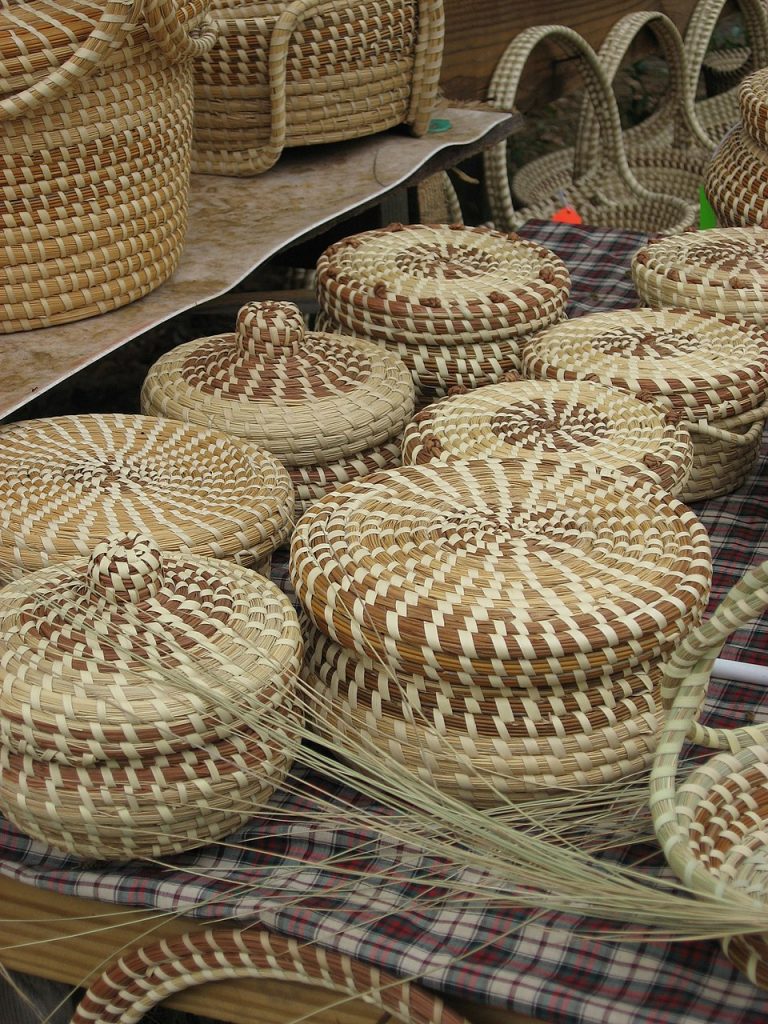
Gullah sweetgrass baskets from Edisto island/Wikipedia • Public Domain
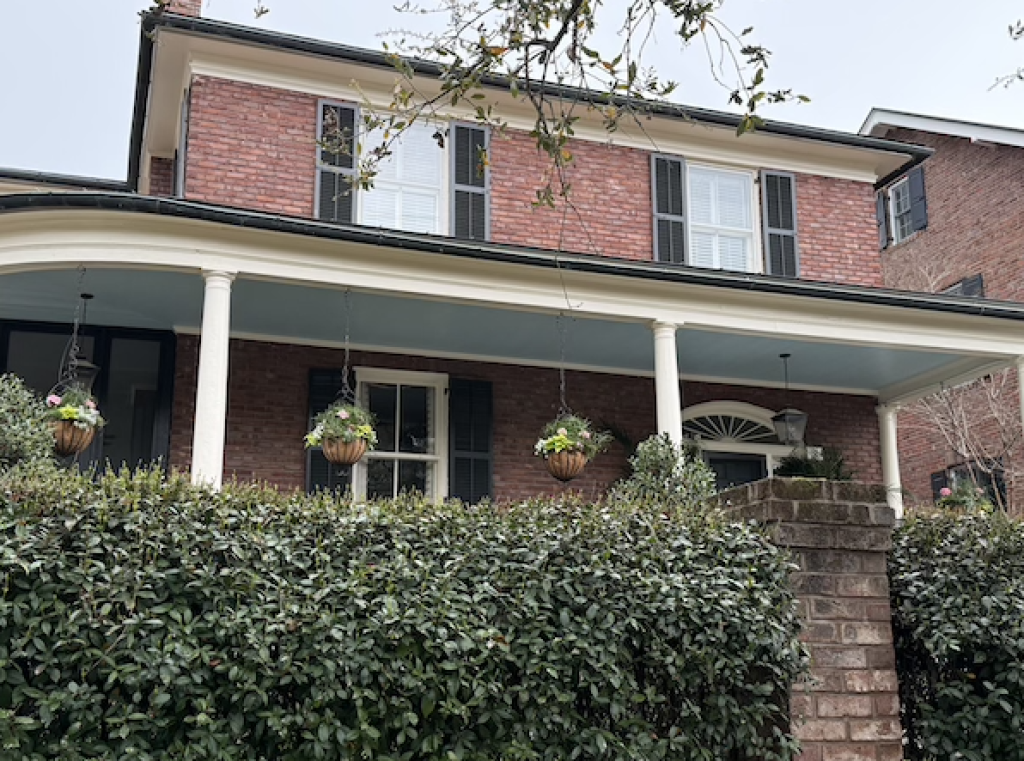
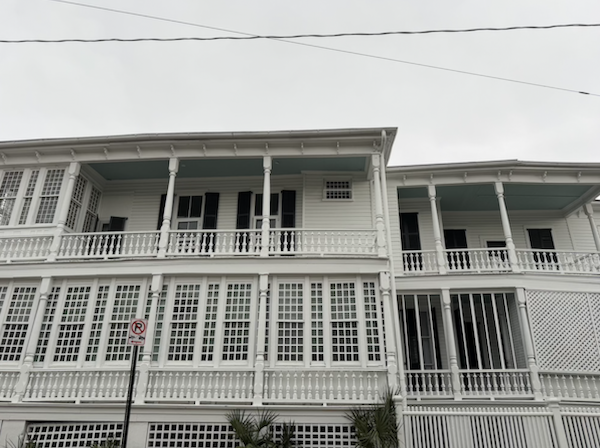
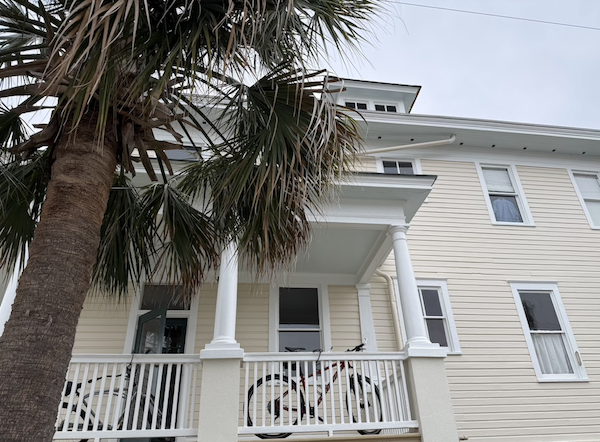
Photo by NPDD
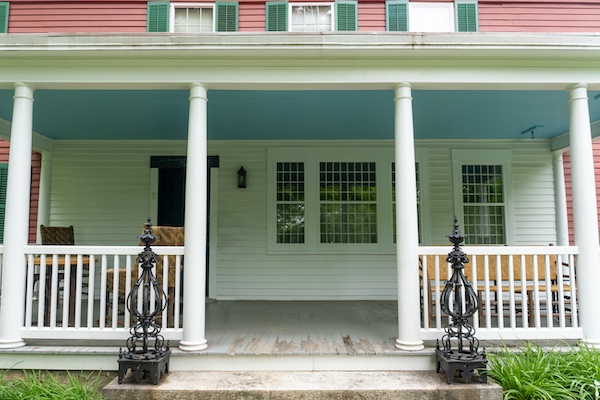
Front porch of Weir House by EWY Media/AdobeStock
Those who look up—and under—while traveling throughout the Lowcountry will often be rewarded with porch ceilings painted blue, more specifically, haint blue.

The tradition of painting porch ceilings in a soft blue‑green shade traces back to the Gullah Geechee people, who believed that evil spirits called “haints” could not cross water. Haint blue ceilings were thought to trick these spirits into seeing an uncrossable barrier, thereby protecting the home. The spiritual safeguard is still visible on many historic houses, but the color is so calming that it long ago slipped its original borders and spread to porch ceilings across the South and beyond (the Weir House is in Connecticut). Today, haint blue may be chosen as much for its cool, airy look and suggestion of open sky as for the old belief that it keeps unwelcome spirits at bay.
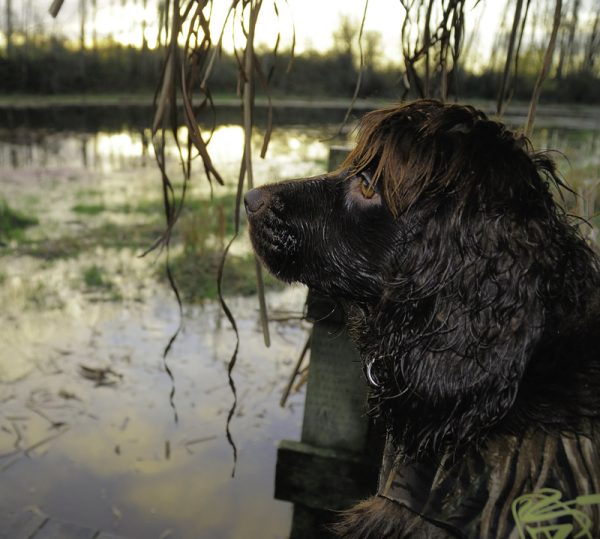
There is yet another color‑coded emblem of the state: the four‑legged, liver‑brown symbol that is South Carolina’s official state dog, the Boykin Spaniel.
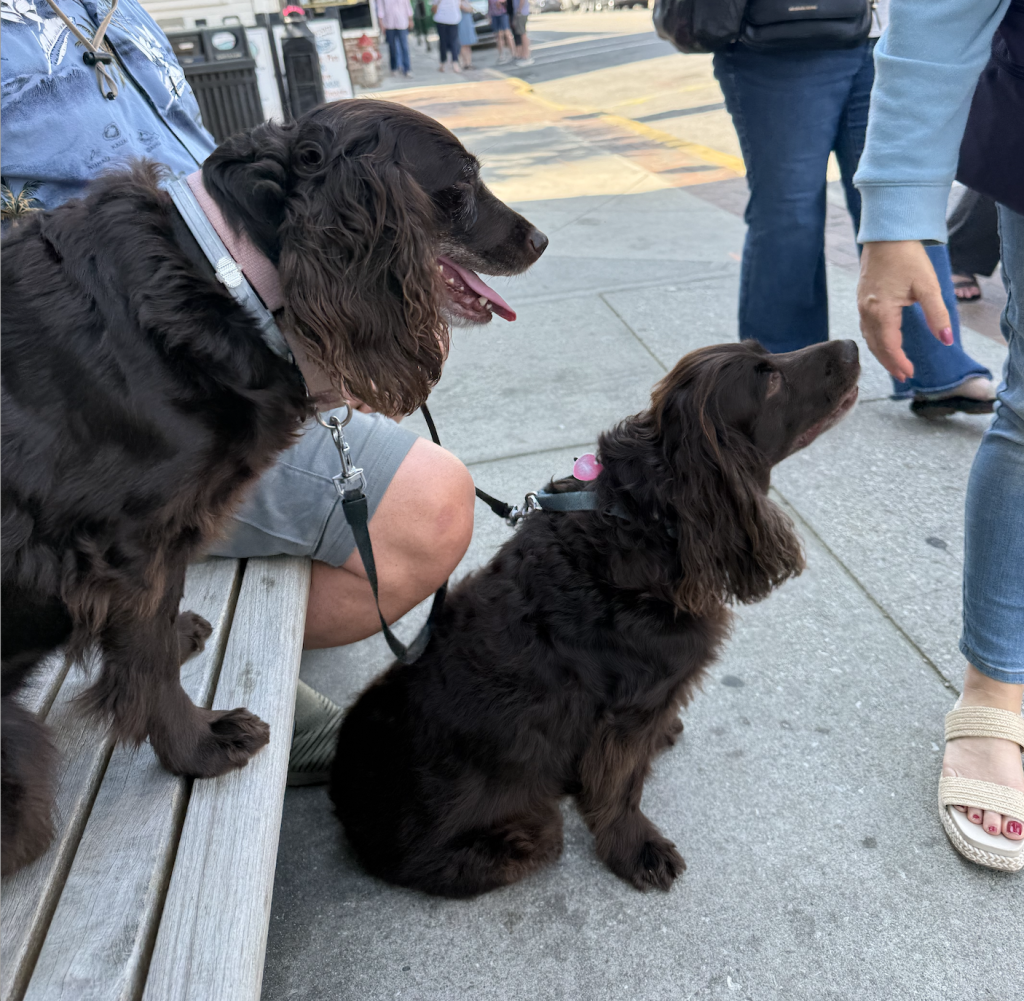
Two Boykin Spaniels we spotted in Charleston
Boykin Spaniels are essentially a “brown‑only” breed by standard, typically b/b at the B locus, expressing brown rather than black eumelanin. This pigment colors the coat, nose, and eye rims, producing the classic deep chocolate‑to‑reddish‑brown appearance. Like haint blue’s consistent use for protection and tradition, breeders have selected for solid, pattern‑free coats over generations, so any agouti patterns controlled by the ASIP gene that might appear in other breeds would be largely hidden by both the brown pigment and a preference for uniform color. Those patterns may still lurk genetically but rarely surface.
Modifier genes add subtle variation beneath that solid exterior—intensity genes subtly enrich or soften reddish tones, and MITF variants influence small white spots, such as the allowed chest patch. Two picture‑perfect solid liver Boykins can carry different “hidden” genetics, much like haint blue varies slightly from home to home yet serves the same cultural purpose.
Both haint blue and the Boykin Spaniel’s coat are “color reminders” of how South Carolina preserves distinctive single-color identities: one a protective tradition against unseen forces, the other a deliberately bred uniformity in a state dog shaped by the Lowcountry’s waters and woods. Yet beneath the surface, genetic or shade diversity persists, revealing layers of history, adaptation, and enduring character.
Modern DNA tests make this even more interesting, because color genes and health genes are often tested together in the same panel. A breeder who orders testing to learn about coat color usually isn’t just getting results for B locus, agouti, and modifiers—they’re also receiving data on soundness. That means breeders can turn color testing from a “nice to know” curiosity into a practical tool for smarter, health-focused breeding decisions.
At the risk of concluding with hyperbole, these are choices made over generations about what to keep, what to honor, and what to pass on. When we look closely at these “single” colors, be they baskets, ceilings, or a dog breed, they are anything but simple: Collectively, they are a tapestry woven from threads of faith and folklore, genetics and memory.
Top photo: Boykin Spaniel © David Williamson | Dreamstime