Unless there’s an 8-pound, bone-in leg of lamb just inches out of reach, “pleading” isn’t a look most of us associate with our dogs. There is, however, one AKC group in which the word appears in several breed standards.
What is it about hounds?
Five hound breeds incorporate the word, “pleading:”
From the Treeing Walker Coonhound: Eyes – large, set well apart with soft hound-like expression, pleading and gentle;
From the Redbone Coonhound: Expression – pleading;
Also the American Foxhound: Eyes – large, set well apart, soft and houndlike—expression gentle and pleading;
And the Bluetick Coonhound: Expression is a typical pleading hound expression, never wild or cowering;
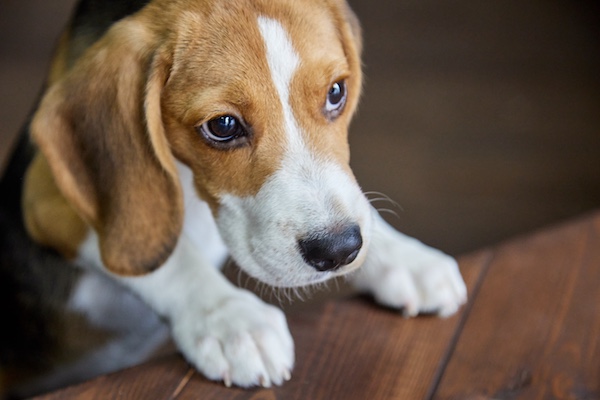
And finally, the Beagle: Eyes large, set well apart—soft and houndlike—expression gentle and pleading.
So, what IS it about hounds?
As far as we can tell, it isn’t that hounds are uniquely “pleading” dogs in real life; it’s that hound people historically liked the soft, soulful, almost melancholy eye in dogs that work closely with people and in packs. Many of these breeds were bred to be intense hunters but gentle, biddable companions, so breeders romanticized that soft “please take me with you” look and wrote it directly into the standard as a hallmark expression.
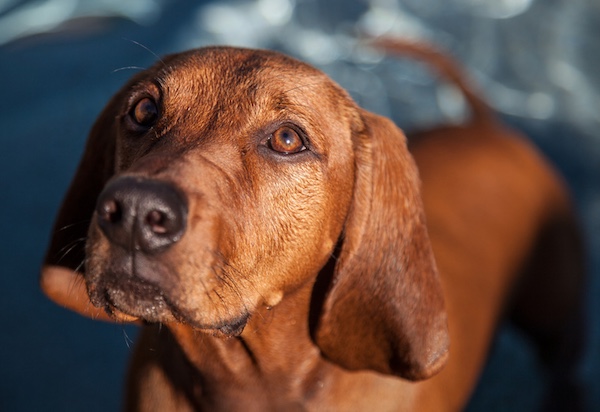
Redbone Coonhound by videodet/iStock
A few things about many of these hound breeds make the word “pleading” an appropriate choice to the writers of those breed standards. Most of the aforementioned breeds (and indeed, many hounds) have relatively large eyes that are soft, and either brown or dark in color. As we see it, pleading is a “flavor word,” a descriptive word that encapsulates how we feel when we see it. We would never describe a terrier’s expression as “pleading,” but “feisty” or “determined”? Absolutely.
It’s not measurable, but in the show ring, “pleading” acts as shorthand. In the breeds that use the term, it helps rule out a hard or foreign expression, reinforces the idea of a biddable dog that works and plays well with others, and evokes the classic soft, “houndy” face. Other hound breeds may have all those qualities without that particular word ever appearing in their standard. The Basset Hound, for example, has a classically melancholy expression without using the word “pleading,” but it suggests the same quality by writing that “the eyes are soft, sad, and slightly sunken.”
Away from the show ring, a judge reading the standards of the aforementioned breeds gets an instant mental picture of the big, gentle hound eye; in these breeds, expression is such a key part of type that the writers chose the strongest, most evocative word they could. Pleading works!
Photo by Aleksandr Finch/FreePik