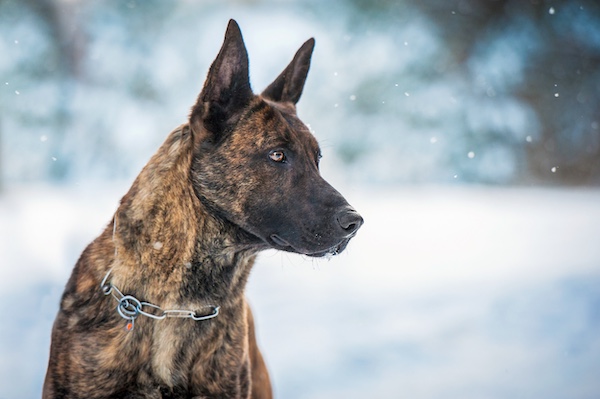
The “wicked intelligent,” loyal, and highly versatile Dutch Shepherd comes in three coat varieties, all double coats. A double coat, by the way, simply refers to two distinct layers of coat rather than just one. A soft, dense, and insulating undercoat that is typically closer to the skin helps regulate temperature. The top coat (or guard hairs) is coarser, longer, more weather-resistant, and helps protect against water and dirt. It is this coat that gives a Dutch Shepherd its visible appearance and texture (short, long, or rough).
If it seems like most Dutch Shepherds seen in photographs or online are short-haired, there is a reason; according to several sources, including the AKC, short-hairs account for 60–80% of the population. Not only is this the most practical coat type for a working Dutch Shepherd (one of the most highly valued working breeds by law enforcement and the military), but it is also considered the “dominant” coat type, genetically speaking. Per UC/Davis, the short coat is controlled by the dominant allele – meaning dogs only need one copy of this allele to express a short coat. Two short-coated parents can produce only short-coated offspring unless they carry either rough or long coat alleles.
Please note! Coat type percentages in Dutch Shepherd populations vary by region, registry, and conservation efforts, and our percentage numbers are general trends based on several sources (including a couple of AIs we used to validate the information).
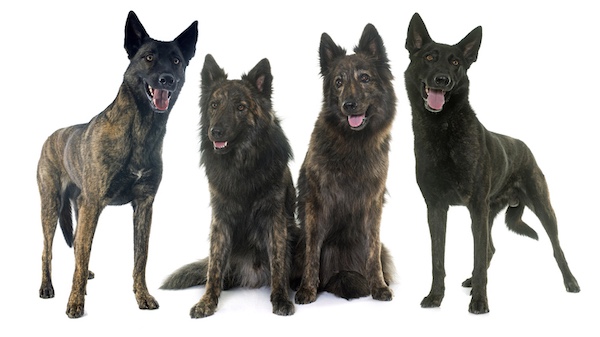
Dutch Shepherd by cynoclub/iStock
That said, the rough-haired variety, while increasing in numbers from a conservation point of view and still widely seen in working lines, is rarer than the short coat and accounts for 15–35% of the breed population. The rough-haired coat is genetically recessive. Determined by variants in the Keratin-71 (KRT71) gene, a rough coat requires two copies (homozygous) of the rough coat allele. This is to say that both parents must carry at least one rough coat allele for rough-haired offspring to be produced.
The least common of the three coat types in the Dutch Shepherd is the long-haired variety, which accounts for 5–10% of the population, at least in the Netherlands. With a straight, harsh coat and pronounced feathering without curls or waves, this coat is genetically recessive and caused by variants in the fibroblast growth factor-5 (FGF5) gene. It shows up only if both parents carry the long-hair allele to produce long-haired puppies.
Historically, decades of strict separation of coat varieties in the Netherlands led to genetic bottlenecks within each coat variety population. Each subgroup became genetically isolated (what some call genetic bottlenecks), which risked the accumulation of recessive alleles that could potentially increase health issues and lower overall fitness. Rough and long-haired Dutch Shepherds, in particular, have small effective populations, which raised concerns about a loss of genetic integrity without fresh genetic input from the more numerous short-haired population. To prevent issues, the Raad van Beheer (Dutch Kennel Club) started to allow carefully orchestrated breedings between Dutch Shepherd coat types in 2014, and will permit such matings until 2034. As Janet Vorwald Dohner points out in her marvelous book, Farm Dogs, while the practice may result in coat types incorrect for a show ring, resulting dogs are, and will continue to be, eminently suitable for a working or companion dog. Allowing strategic interbreeding ensures that future generations can maintain classic breed traits while retaining genetic variability, and future breeders can use DNA testing to reinforce desired traits and minimize unintended effects.
Photo: Portrait of Dutch Shepherd by Rita Kochmarjov/Adobe Stock Photo
the real answer is to alter the conformation standard to allow for the results of the crosses