
If you were a woman living in the Yorkshire Dales in the 17th century, you probably lived a humble life. You woke up at dawn, lit the hearth, made a simple breakfast of porridge and bread for the family, and when the family dispersed for the day, you started your other chores. By noon, you had milked the cows or goats, fed the chickens, collected their eggs and mended clothes. Depending upon the day, by dinner time you had either baked bread, churned butter, tended the garden, made candles or soap, spun wool, or collected water.
And then you made the evening meal for a hungry family. Seasons determined whether the men would plough, sow, weed, or harvest. They also repaired tools, made hay, and tended to the large animals. They carted manure, gathered firewood, or maintained fences or buildings. After dinner, the family might tell stories or play an instrument, and then it was prayers and off to bed by dusk. There was little room for shirking responsibilities; every person’s contribution was vital to the family’s survival and, by extension, to the well-being of the entire community.
Life was a bit different if you were a yeomen or even a tenant farmer, and considerably different if you were a major landowner like the second Duke of Buckingham. A nobleman or woman enjoyed comforts far beyond those of everyone else, their respective days balancing business, leisure, social obligations, charitable work, and overseeing servants.
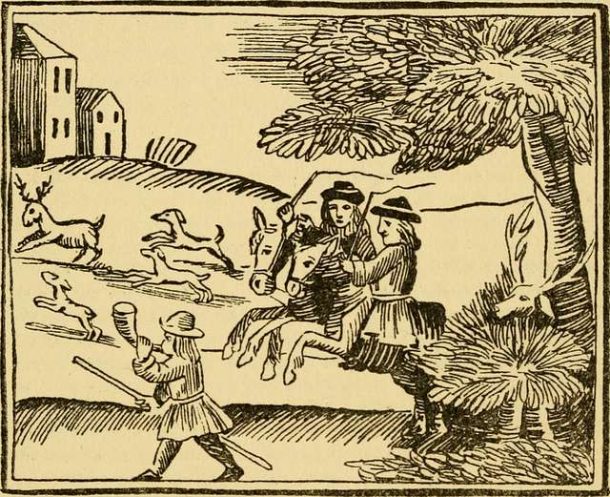
One of the rare occasions when the lives of Yorkshire peasants and noblemen intersected directly was during the Bilsdale Hunt. Though the Hunt did not have a fixed, regular schedule as modern hunts do, and was organized when opportunity and conditions allowed, each hunt was an event that excited everyone regardless of class. For nobility and gentry, it was a time to show off one’s status, wealth, hounds, and horsemanship. The feasts that often accompanied hunts offered temporary employment to villagers who might serve as grooms or beaters, help manage the hounds, or help prepare and serve food. The hunt was a break from routine for the entire community, and one of the few times these worlds overlapped in a meaningful way.
We circle back to George Villiers, the second Duke of Buckingham, who established the Bilsdale Hunt—widely recognized as England’s oldest fox hunt—in the mid-17th century. The Bilsdale Hunt exemplified a broader shift among the landed gentry who turned to fox hunting as deer became scarce and foxes, along with rabbits, were increasingly viewed as agricultural pests. This transition marked a significant change in rural sporting culture and reflected the evolving relationship between landowners and the countryside.
The Bilsdale Hunt was among the first to keep a dedicated pack of foxhounds, dogs that evolved from mixed local breeds to the English Foxhound. The pack (normally kept at 28 hounds) was bred by the Duke who, along with local hunting families, maintained them and, to the delight of historians, kept records—central to Bilsdale’s claim as the oldest established foxhound pack in England. The claim is often challenged by Yorkshire hunts such as Farndale and Sinnington, but between the Duke’s records, oral histories, and parish records, there is substantial evidence for the claim.
Another interesting aspect of the Bilsdale Hunt was that it was among the first to keep hounds specifically for hunting foxes, rather than using general-purpose hunting dogs. Early records and local ballads even mention some of the hounds by name: Dido, Spendigo, Gentry, Hero, Traveller, Countess, Towler, Bonny Lass, and Jowler.
As of 2025, the Bilsdale Hunt still exists! It continues to operate in North Yorkshire, keeps its kennels at Woolhouse Farm, Bilsdale, Helmsley, North Yorkshire, and covers an area of about 300 square miles of terrain that includes moors, pastures, and woodlands. But there have been changes. Since the Hunting Act of 2004, traditional fox hunting with hounds is prohibited in England, and the Bilsdale Hunt now practices trail hunting (hounds follow an artificially laid scent). The hunt has evolved from its aristocratic, private origins to become known as one of the friendliest and most inclusive hunts in the UK.
Those wanting to read more about the Bilsdale will want to read, “England’s Oldest Hunt: Being Chapters of the History of the Bilsdale, Farndale and Sinnington Hunts, Collected During Several Years” by J. Fairfax-Blakeborough published in November 1907. Readers will be treated to a rich and detailed account of the origins, traditions, and personalities behind three of Yorkshire’s most storied foxhound packs.
Top image: Woodcut by Noel T. B. Turner from “England’s Oldest Hunt” from 1907