Those lucky Aussies.
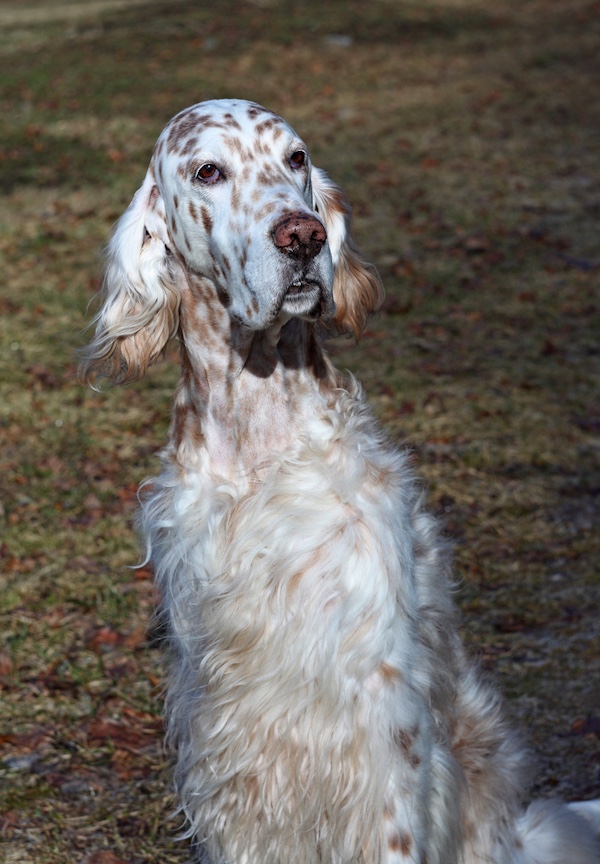
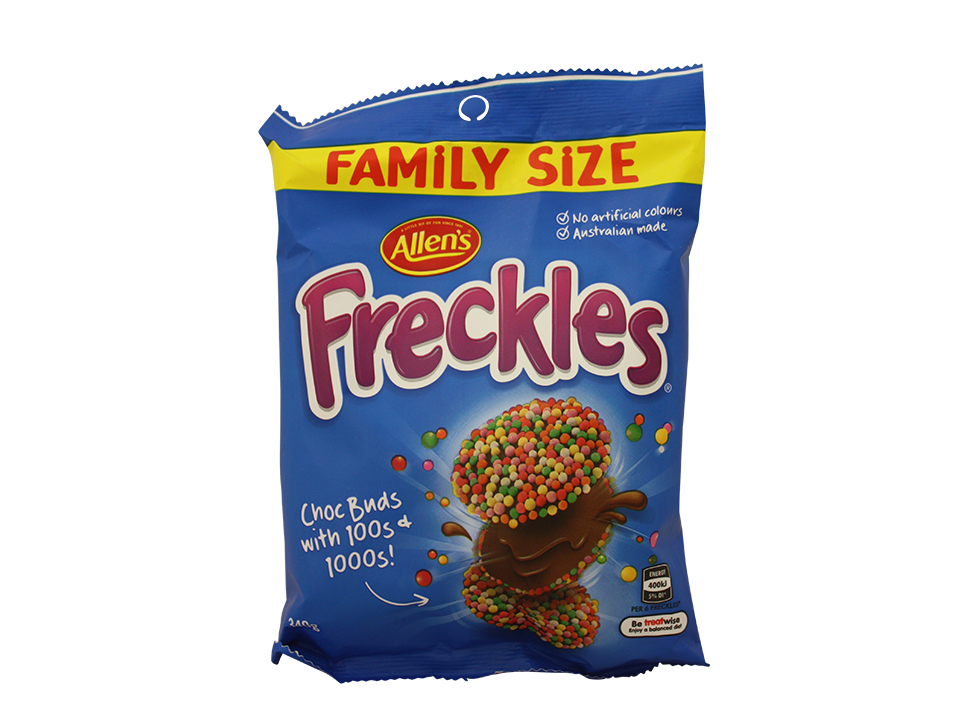
With roots going back to 17th‑century France where they were once called “nonpareils,” Allen’s Freckles have become one of Australia’s best‑loved candies. Tiny, multicolored sprinkles scattered over the chocolate look like a dense dusting of bright, sugary freckles, each piece a small disc of smooth milk chocolate buried under a riot of “hundreds and thousands” of candy beads. We were reminded of the candy when we overheard an English Setter owner explaining “belton” to a youngster, using the word to describe the color of the freckles on their dog’s coat. In this case, the dog the child was gently petting was an “orange-freckled” (orange belton), but per the AKC standard, an English Setter may also be blue belton, tricolor, lemon belton, and liver belton.
There are nuances within each color, which is to say that within each registrable color, there are shades. An orange belton English Setter may in fact be lemon, ranging from a pale cream-yellow to a soft buttery tone. A blue belton may appear steel gray, slate, or nearly charcoal depending on the density of ticking and the underlying white. Tricolor setters can vary from crisp black-and-tan with clear points to dogs where the tan is muted, diffuse, or only apparent in certain lights or at maturity.
And this brings us to the rarest coat color seen in the English Setter: chestnut belton.
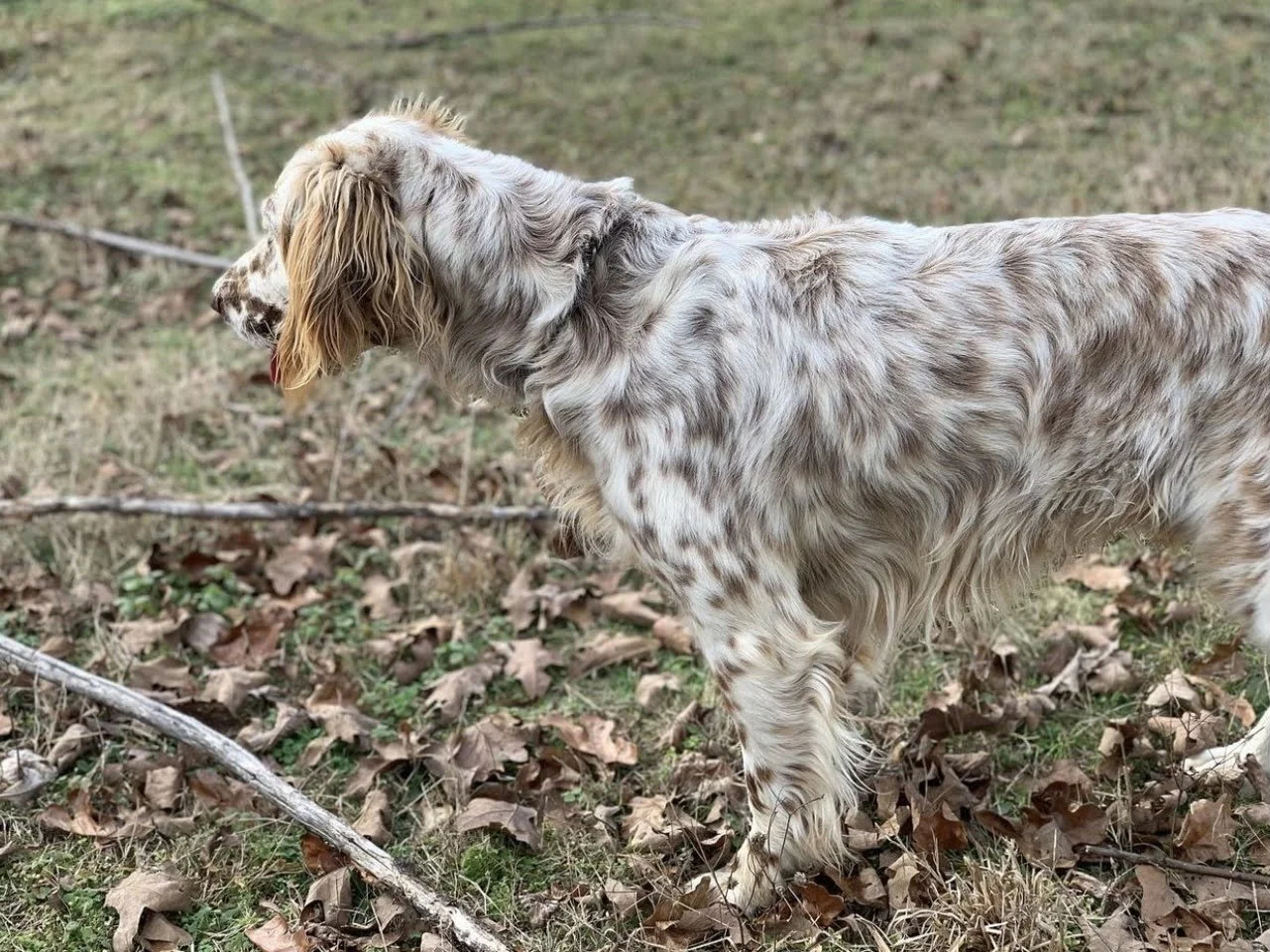
In English Setter registration and in the written standards, ‘chestnut’ is not a separate color category but a way of describing liver pigment, and it is as a liver that such a dog would be registered. It is rare in the breed because it sits at the intersection of genetics and long‑standing breeder preferences.
Blue belton was seen as very classic for the breed—high contrast, visually striking at a distance, and strongly associated with the Laverack‑type dogs that shaped the modern show image, so fanciers and breeders reinforced the look over time. Orange belton shared the same clean white ground and speckling while offering a warm, “golden” aesthetic that many people found appealing; tricolors simply added tan points to the already popular blue base, which kept them in circulation as an attractive variation rather than an outlier.
It is probable that practicality in the field also played a role: dark or strongly contrasting speckling on a white dog was easier for a handler to see in cover and changing light over very pale lemon or softer liver shades, so at the end of the day, bloodlines that were prized for working ability often carried blue and orange forward just by default. Once these colors were numerically common in influential kennels and seen repeatedly in winners and well‑regarded field dogs, a vicious cycle set in: breeders wanted to emulate successful dogs, and less common colors, including chestnut, simply appeared less often and were sometimes seen by breeders and judges as the “odd dog out.” Popular colors at the time were repeatedly selected for, while dogs of less popular colors were used less often in breeding program. As a result, the practice effectively shrank the number of carriers over time.
Genetically, liver/chestnut requires the recessive bb genotype at the B locus (which converts black pigment to brown) in combination with patterns at other loci that allow the ticking and belton pattern to appear. A puppy must inherit the recessive liver allele from both parents to express the color. When relatively few breeding dogs carry the bb allele, liver or chestnut belton pups are produced only occasionally, even in large litters, and so the color remains rare. As a result, chestnut belton persists today as one of the least frequently seen expressions in the English Setter palette.
Pity. As we see it, these are handsome dogs!
Photo by SokolovskayaG/iStock