Silken fanciers around the world—and especially those in the UK—have real reason to celebrate as we wrote. The Silken Windhound has reached a milestone.
The Silken Windhound, a modern American sighthound with an old-world silhouette, has gained recognition by the Royal Kennel Club. Effective 1 October 2026, the breed will be recognized by the RKC and classified in the Hound Group on the Imported Breed Register. This recognition will bring the Royal Kennel Club’s total number of recognized pedigree breeds to 228. Exhibitors will need to wait a bit longer to step into the ring, however, as Silkens are not eligible to compete at RKC licensed breed shows until an official interim breed standard has been published.
For a breed still young by purebred dog standards, this is no small moment. The Silken Windhound’s journey didn’t begin in a Victorian show ring or on an ancient hunting estate, but in the United States in the late 20th century.
Austin, Texas-based Borzoi breeder, Francie Stull, wanted a smaller, coated sighthound: elegant and athletic, but companionable, manageable in size, and sound in temperament. After searching for an existing breed that fit that vision, she concluded that the dog she wanted didn’t exist.
Yet.
To bring her vision to life, Stull drew on her established Borzoi background and selected from champion show and performance Borzoi lines, Whippet bloodlines, and a small multigenerational line of Whippet-based lurchers. The resulting dogs were not simply miniature Borzoi or Whippets, but the beginning of a separate modern sighthound breed selected for type, soundness, athleticism, temperament, and manageable size. Later DNA work added another layer to the breed’s origin story, confirming a distant herding-breed contribution in the background of the population. That history also helps explain why some modern Silkens may carry the Multi-Drug Resistance, or MDR1, mutation, something responsible breeders now manage through genetic testing and informed veterinary care.
The breed’s story is generally traced to the early 1980s, with the first recognized Silken Windhound litter born in 1985. That means the Royal Kennel Club’s 2026 recognition comes roughly 41 years after the breed’s first recorded litter, and more than four decades after the original vision began taking shape. In 1998, the name “Silken Windhound” was officially adopted, and in 1999, the International Silken Windhound Society was chartered to maintain pedigrees and guide the breed’s development. In 2000, the ISWS closed its studbook and initiated DNA-verified parentage for registered dogs, making the Silken Windhound unusually well documented for a young breed.
Recognition has come gradually. Slovenia is credited by the UK Silken Windhound Club as the first national kennel club to recognize the breed, doing so in 2004. The United Kennel Club in the United States recognized the Silken Windhound in March 2011. The American Kennel Club has not yet granted full recognition, but after years of data-gathering by the ISWS, the breed was accepted into the AKC Foundation Stock Service in April 2026. The breed is not currently recognized overall by the Fédération Cynologique Internationale, though individual FCI-member kennel clubs in countries such as Slovenia, Switzerland, Germany, the Netherlands, and Finland have granted it recognition or national acceptance.
In Britain, the United Kingdom Silken Windhound Club was initiated in 2010, and the UK hosted its first Silken event, the UK Silken Rally in Kent, in May 2012. As for how many Silkens are currently in the UK, we weren’t able to find reliable data. Older breed discussions put the UK population at only a few dozen in 2012, but the breed has surely grown since then, and Royal Kennel Club registration should eventually provide a clearer picture.
For Silken Windhound fanciers, this recognition is more than a paperwork change. It marks the arrival of a carefully developed, DNA-documented modern sighthound in one of the world’s most influential kennel systems. The Silken Windhound may be young, but its path to recognition has already been long, distinctive, and deeply rewarding for its fan.
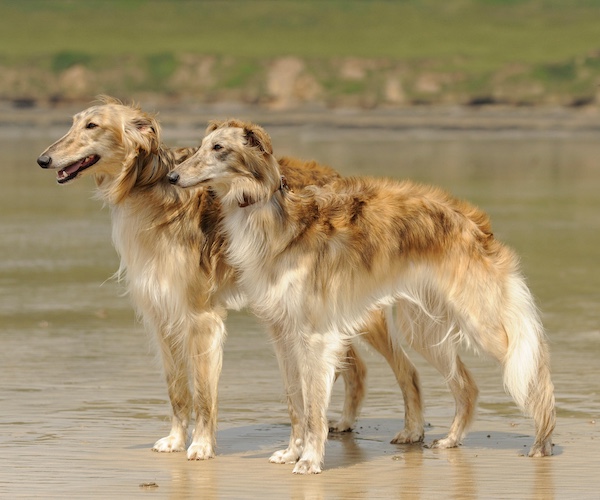
Photo of a male and female Silken Windhound by farlap/alamy