We jump on a recent announcement to segue into a marvelous word associated with the Appenzeller Sennenhund.
The AKC’s Foundation Stock Service news page—updated October 13, 2026—announced that the Appenzeller Sennenhund Club of America will serve as the breed’s AKC parent club. Mind you, the Appenzeller remains in Foundation Stock Service, but a designated parent club provides the organized national body that represents the breed to AKC and can undertake the planning, record keeping, education and eventual applications required for later stages. This is an organizational development, not an announcement of full recognition or advancement to the Miscellaneous Class.
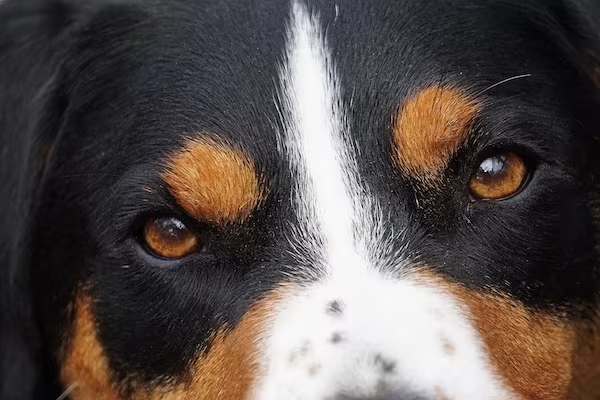
In this post, we want to delve into a word you won’t find as a name in the formal breed standard, but rather on the official Swiss Appenzeller Sennenhund Club’s explanatory breed page. The club writes that the white blaze is a Blässe and that the Appenzeller can be popularly called a Bläss.
One Little “e” Makes a Distinction Worth Keeping
Blässe identifies the marking; Bläss is the popular name for the dog that wears it. The Swiss club makes the connection explicitly: “Daher wird der Appenzeller Sennenhund im Volksmund auch «Bläss» genannt.” (got that?) In English, the Appenzeller Sennenhund is therefore also popularly called “Bläss.”
It’s a small distinction, but one worth understanding before adding the word to our breed vocabulary.
The marking behind the name isn’t just any patch of white. The club describes a conspicuous blaze running from the top of the head down the bridge of the nose and partly or completely around the muzzle. The white on the chest, feet and tail tip is described separately in the FCI standard. It is the facial blaze, specifically, that the club connects to the popular name.
We like this sort of terminology because it gives us more than a description of color. It tells us which feature people noticed enough to make it a name for the dog itself. That connection is also why we should resist using Bläss loosely, either as a term for any white marking or as the breed’s formal name.
The source deserves a distinction of its own. Although the Swiss club’s page is headed “FCI-Standard,” its introduction explains that the text summarizes important points and provides the complete standard separately. The explanation of Bläss appears in the club’s accompanying breed description, not in the formal standard. That matters when we explain where the word comes from.
The English-language FCI standard does describe the marking: a “distinct white blaze” running without interruption from the skull over the bridge of the nose and potentially extending partly or completely around the muzzle. It also describes the Appenzeller as having a “cheeky expression”—a particularly appealing choice of words for a muscular, agile working dog. Cheeky. How wonderful.
The standard tells us what the blaze should look like. The Swiss club gives us the popular name associated with it. These are different kinds of information, and each contributes something to our understanding of the breed.
That is the sort of word we think deserves preserving alongside the dogs. “White facial marking” tells us what we are looking at. Bläss gives us something more: a glimpse of how people speak about the breed where it belongs.