Say you’re in a meeting (and since this is a dog-centric site, let’s say it’s a kennel club meeting), and the subject of a task comes up that you feel strongly about. You know with certainty that one other person at the meeting shares your opinion about the importance of the task, and while each of you silently wishes the other would volunteer to do the job that has to be done, neither of you wants to be the one to suggest it.
It just now took us three sentences to explain what speakers of the Yahgan language had a single word for – “mamihlapinatapai.” The Guinness World Records people called it the most succinct word in existence not because of its physical length, but because it uniquely expresses a highly complex and nuanced psychological concept: Two people wanting the same thing to happen, but neither willing to take the first step.
It would now be impossible for Yahgan speakers to find themselves in that scenario; the language became extinct when its last native speaker, Patagonian ethnographer and cultural activist Cristina Calderón, died in 2022 at age 93. Her family created a dictionary and recorded materials to preserve some aspects of the language for future generations, and as we value ethnic diversity, one hopes that someone will resurrect it.
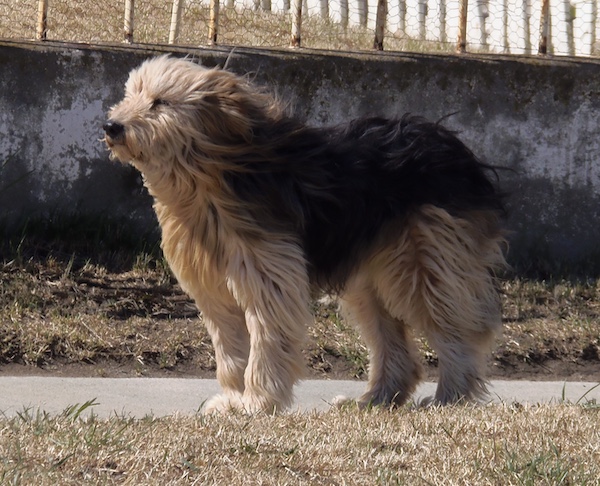
In a way, the Patagonian Sheepdog – a rare herding breed from the same southern regions of Chile and Argentina – is a living reminder that not all treasures from Patagonia have vanished.
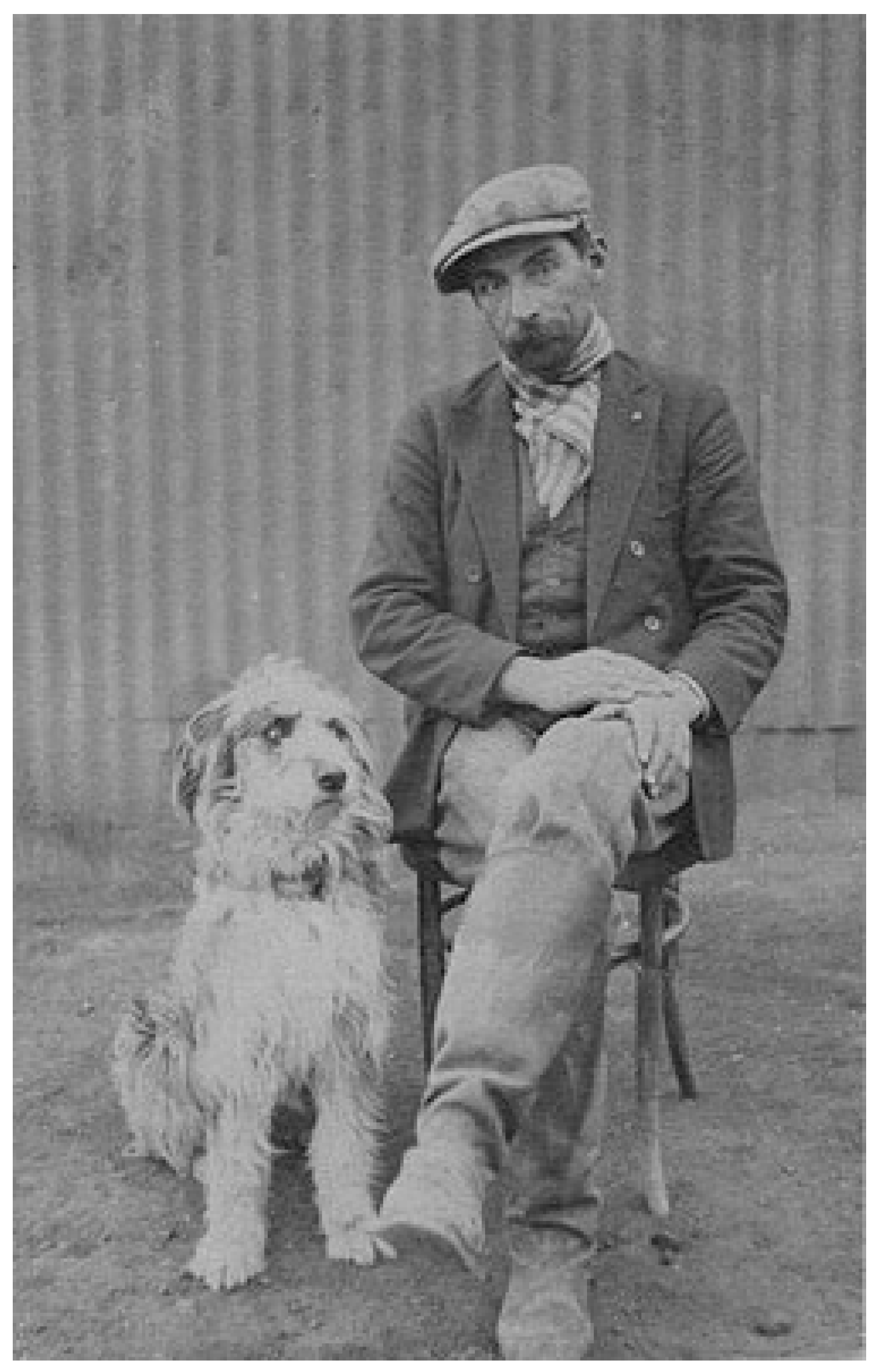
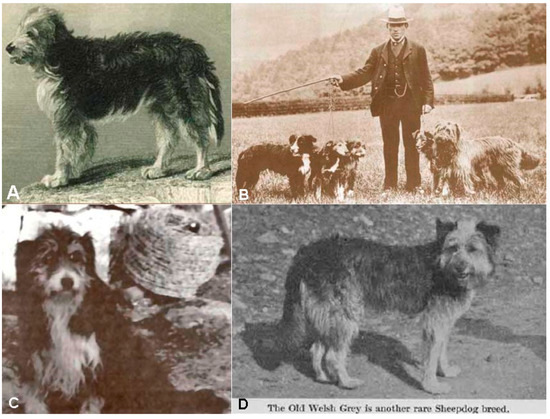
We may never know when, exactly, the first Patagonian Sheepdogs appeared in Chilean Patagonia, but historical records and genetic analysis suggest they descended from working dogs brought by Scottish shepherds who migrated from the Falkland Islands to Chile. A genomic study of 159 Patagonian Sheepdogs revealed they’re most closely related to Border Collies and Australian Kelpies, sharing a common ancestor with UK herding breeds from approximately 150 years ago.
In 1933, the Menéndez Behety Society, a major sheep farming company that operated extensive estancias, or ranches, throughout Patagonia during the early 20th century, published a document called the Revista Menéndez Behety (Menéndez Behety Review). It documented the characteristics and working abilities of these sheepdogs providing valuable historical records about the dogs’ traits, intelligence, and herding capabilities essential for large-scale sheep farming in the harsh Patagonian environment.
And essential they were – and still are.
The breed has a fundamental part in the region’s economy where approximately 70% of Chile’s 2.03 million sheep population is concentrated in the Magallanes and Aysén regions. Though Patagonian Sheepdogs remain largely undocumented, with no genealogical records, census data, or official breed recognition from major international kennel organizations, Chile’s extensive sheep production systems would not be economically or physically viable without these well-trained working dogs.
Some readers may wonder if other breeds wouldn’t suffice. The short answer is probably not. Patagonia has unique conditions including strong west winds of roughly 25 to 93 mph in spring and summer. The arid to semi-arid steppes have a mean annual temperature of around 41.7 °F, and most other sheepdog breeds, even working ones like Border Collies, aren’t naturally acclimated to extreme, windy steppes. The dogs are independent but disciplined, crucial when working over long distances where constant supervision is impossible.
Other readers might wonder if the Patagonian Sheepdog is even a purebred breed. Scientific and historical sources typically describe the Sheepdog as a “landrace herding dog” or a “regional working population.” It may be most accurate for us to refer to the dogs as a distinct functional herding landrace, so why are we talking about it here?
We’re covering it because it may be a perfect storm of how recognized breeds begin. Many modern purebred dogs (including several LGDS (Livestock Guardian Breeds) started as regional landraces refined through function. We suspect Patagonian Sheepdog is at that historical stage right now. It already breeds true in purpose and general type, it has a definable lineage rather than random mixed origins, and it fills a regional niche that shaped it into something distinct the same way the environment shaped the Pyrenean Shepherd and Icelandic Sheepdog.
It strikes us that breed recognition almost always follows use, consistency, and cultural value. The Patagonian Sheepdog already has all three. We can’t take credit for the following statement, nor can we recall where we first saw it, but “kennel clubs don’t create breeds—they standardize them after the fact.”
Top image of Patagonian Sheepdog by Gernikatar/shared from Wikicommons/Creative Commons Attribution-Share Alike 4.0