It stands to reason that the lens of a working dog association is laser focused on working ability of a breed in its purview; it will surprise no one, then, that the New Zealand Sheep Dog Trial Association takes the position that the New Zealand Huntaway should not be shown at a dog show because a conformation ring cannot prove its essential task of working stock. More specifically, the official Dogs New Zealand standard for the New Zealand Huntaway stipulates that the dog’s voice is a defining working feature: its bark while moving stock should be deep, loud and sustainable throughout the working day.
The standard’s exact wording is “deep, loud and able to be maintained all day.” Not simply a dog that likes to bark, then, but one whose voice is part of its working equipment. Endurance applies to more than its legs.
You can see the purpose in New Zealand’s sheepdog trials. In the zigzag hunt, sheep start at the bottom of a steep hill, and the Huntaway drives them uphill along a marked course. The dog must face and bark at the sheep, not the handler. That distinction makes the point rather nicely: the voice has a job to do.
The standard’s account of the breed’s development adds another practical consideration. With the shepherd often far behind the dog, a silent worker could be difficult to keep track of. Farmers wanted stamina, but they also wanted a dog that could bark to control the flock. The voice helped answer a particular working need.
That emphasis puts the standard’s flexibility about appearance into perspective. Color, coat and size are explicitly secondary to working ability, while the quality and staying power of the bark receive their own clear requirement.
For the Huntaway, barking is neither incidental nor simply evidence of an enthusiastic temperament. It is an essential part of how the dog works. A photograph might show a beautifully constructed dog, but it cannot tell us whether that dog has the deep, carrying, durable voice the standard asks for. That part of the Huntaway has to be heard—and heard at work.
At the moment, the Huntaway is recognized by Dogs New Zealand, which publishes its official breed standard, but it is not recognized by the UKC, AKC or the FCI. UKC recognition, for instance, would open the door to conformation as well as appropriate performance events. For those who share the New Zealand Sheep Dog Trial Association’s opposition to showing the breed, that prospect might be less an ambition than a concern. Some might opine that the question would remain the same: a ring can reveal how a Huntaway is built, but it cannot establish whether its bark is equal to a day’s work.
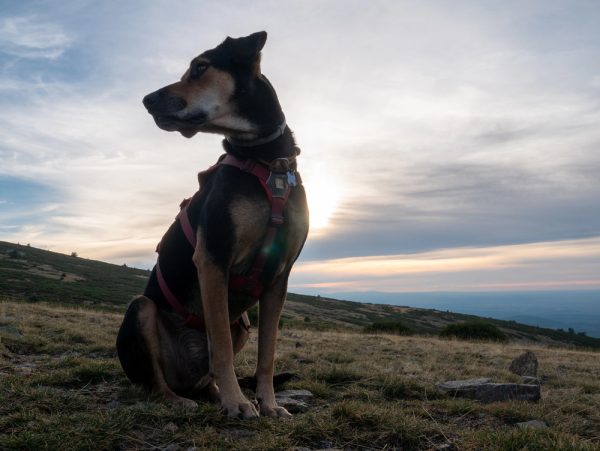
Photo of a New Zealand Huntaway by wirestock/deposit photo