During the final years of World War II, a stray black Labrador Retriever named Rex was recruited by the British Army as a mine-detection dog. Serving with No. 4 Mine Detection Platoon of the Royal Engineers under Lt. Peter Norbury, Rex worked in some of the war’s most dangerous conditions, particularly during the brutal fighting in Germany’s Reichswald Forest in early 1945. There, retreating German forces had left dense fields of anti-personnel mines hidden beneath mud, forest debris, and heavy undergrowth.
Unlike many dogs that became rattled under artillery bombardment, Rex reportedly continued working with remarkable steadiness despite intense shelling. Norbury later wrote that Rex “always worked with great zest” and showed “complete disregard to the very heavy enemy shelling” while helping clear safe passageways through heavily mined terrain. He credited the dog with “saving casualties that would most certainly have occurred but for his devotion to duty.” On one occasion in March 1945, Rex located so many mines in a single day that Norbury called him the bravest dog he had ever seen.
Rex’s work was so trusted that he was later sent ahead to ensure an area of the Reichswald was safe before a planned visit by Winston Churchill.
Tragically, Rex’s story ended on a heartbreaking note. Because he had originally been a stray — likely obtained from a rescue kennel or police pound — military bureaucracy determined that he was technically ownerless and therefore ineligible for formal recognition. His recommended valor award was canceled, and after the war he was euthanized under government policy regarding unclaimed strays. Today, however, Rex is remembered as one of the unsung canine heroes whose courage saved countless Allied lives during the final push into Nazi Germany.
We doubt this devotion will surprise Lab owners. His ending, however, angers and saddens all of us.
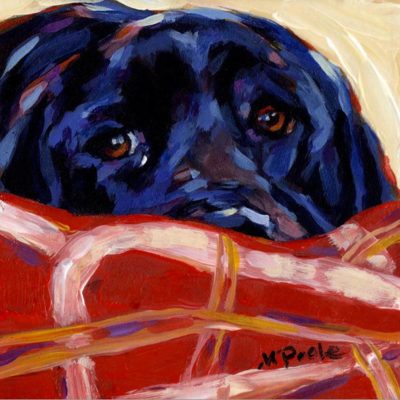
Image: “Undercover” by Molly A Poole
http://www.granitedog.com/
http://fineartamerica.com/
https://www.facebook.com/