It was a memorable description. An early Cairn Terrier breed standard printed in the 1914-1915 Cairn Terrier Club Year Book stated: “A general foxy appearance is the chief characteristic of this Working Terrier.”
Yet the same standard called for a broad skull and powerful muzzle, and specifically listed a “snipey” muzzle as a fault. Whatever the authors intended “foxy” to convey, it was not permission to disregard the rest of the head description.
More than a century later, the word invites a question: Does “expression” mean the same thing as “head shape”?
The AKC standard approved on May 10, 1938, still called for a head “well furnished with hair giving a general foxy expression.” Note the shift from the earlier “foxy appearance” to a “foxy expression,” a narrower phrase. When and why the wording changed is something we couldn’t find. Drat.
For more than 87 years, that wording stood. The Cairn Terrier passed through generations of breeders, exhibitors and judges, but the official AKC description of the breed didn’t change. Then, in October 2025, the AKC Board approved a Cairn Terrier Club of America proposal for publication and comment, and in February 2026 it authorized the club to ballot its members. The proposal rewrites the entire standard, and among its many changes, it would substitute “keen” for “foxy.”
It’s a small change in wording that raises a larger question about what the old word communicates, and what its replacement would communicate better.
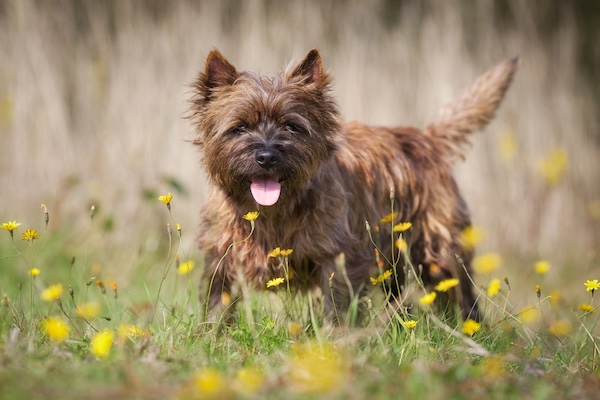
Cairn Terrier educators have been careful to draw the line. The Cairn Terrier Club of Southern California’s amplification of the standard spells it out: the Cairn should have a foxy expression, not a foxy head. That expression is smart, alert and cunning. Breeder-judge Pat Joyce comes at it from the anatomy: “The Cairn muzzle is not as long, narrow, and snipy as that found in a fox.” Together, they describe a dog with a fox’s wits but not a fox’s face. As far as we can tell, it’s how the phrase has been taught. Whether anyone actually misread it is a question we can’t answer, and the proposal doesn’t either.
So what should a Cairn head look like?
Some of the answer will sound familiar. The proposal’s 5:4 skull-to-muzzle ratio and its equilateral triangle, running from the nose through the eyes to the ear tips, already appear in Cairn educational material, including the CTCA’s own Illustrated Standard. The proposal would write them into the standard itself.
The 1938 text calls for a head “shorter and wider than any other terrier,” a skull broad in proportion to its length with a decided stop, and a muzzle “strong but not too long or heavy.” It also lists a too-narrow skull as a fault. Wide-set, rather sunken eyes sit beneath shaggy eyebrows and give “a keen terrier expression,” and small, pointed, erect ears are set wide apart. The proposal describes much the same dog in its own terms. The head is “short and wide,” and the skull is broad in proportion to its depth, with a pronounced stop and good fill under the eyes. The muzzle is strong and full.
We noticed that “keen” isn’t new. It’s been in the 1938 eye description all along. Until the membership ballot result and any final AKC approval and effective date are known, the 1938 standard remains the one judges use. The proposal is still a proposal, and an interesting one – but why we, Puli fanciers since 1978, find it interesting?
We might not normally have noticed it, but as they say, you never forget your first. The Cairn Terrier was our childhood breed, and these little chaps have stayed in our affections ever since.
Photo by AuthorBigandt/DepositPhoto